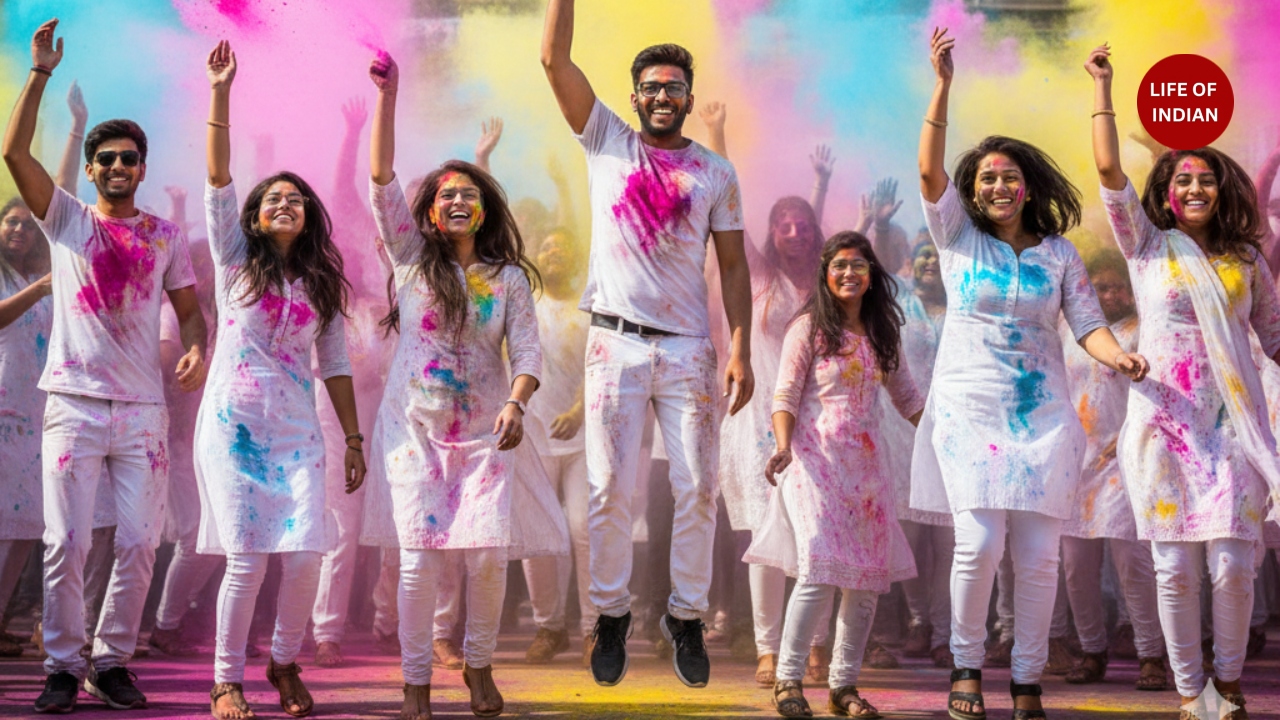
Holi, the vibrant Festival of Colors, is one of the most widely celebrated festivals in Hindu tradition. Marking the arrival of spring and the triumph of good over evil, Holi begins with Holika Dahan on the full moon night (Purnima) of the Hindu month of Phalguna. The next day is filled with colors, music, dancing, and joyful gatherings.
Braj Holi Begins with Basant Panchami: What Is Holi Danda & Why Braj Celebrates Holi for 40 Days
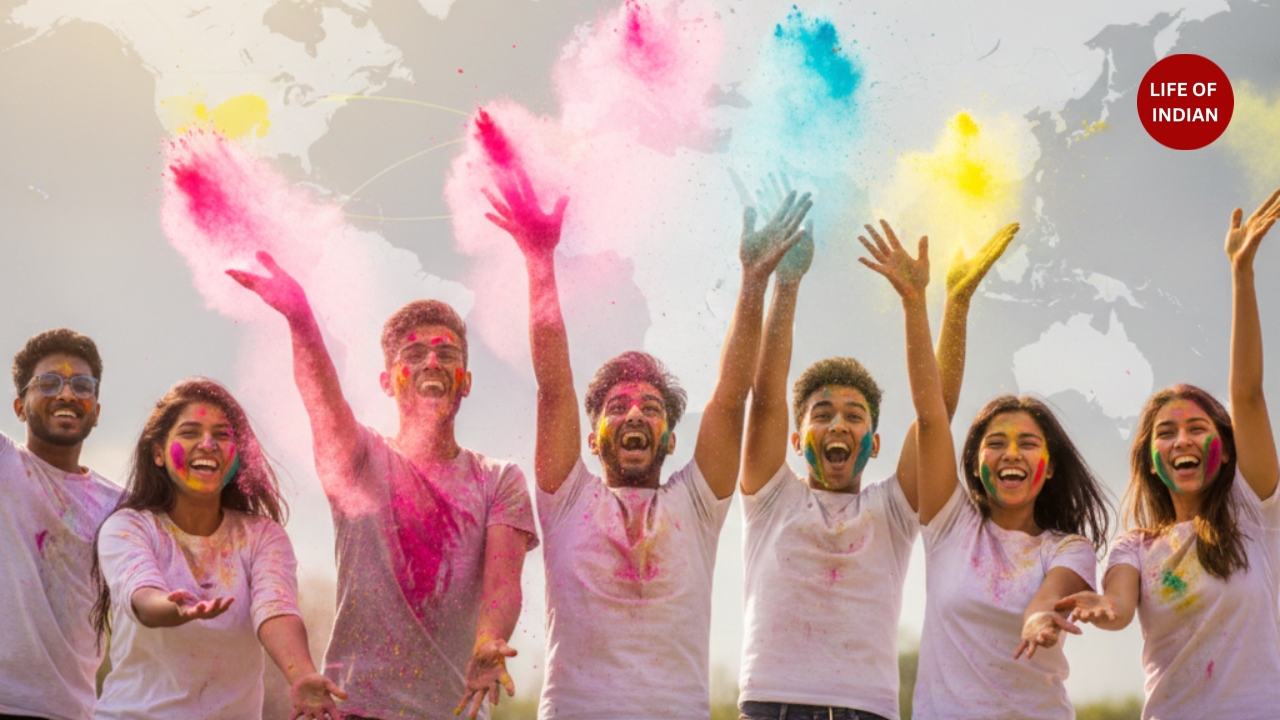
While India remains the heart of Holi celebrations, the festival has crossed borders and is now celebrated in many countries across the world. Thanks to the Indian diaspora and the universal appeal of its joyful spirit, Holi has become a global cultural event.
Let’s explore the countries where Holi is celebrated outside India.
Nepal – Celebrated as Phagu Purnima
In Nepal, Holi is known as Phagu Purnima and is one of the country’s most important festivals after Dashain and Tihar.
The celebrations last for two days:
- The first day is observed in the hilly regions, including Kathmandu.
- The second day is celebrated in the Terai plains.
Similar to India, people play with colors, gather in public spaces, and enjoy traditional music. A ceremonial wooden pole called “Chir” is erected in Kathmandu’s Durbar Square before Holi begins.
Bangladesh – Dol Purnima and Basanta Utsav
In Bangladesh, Holi is observed as Dol Purnima or Basanta Utsav (Spring Festival). The Hindu community celebrates it with temple rituals, devotional songs, and cultural programs.
In places like Dhaka University, Basanta Utsav has become a colorful public celebration where people wear yellow outfits symbolizing spring and apply colored powders to each other.
Pakistan – Holi in Sindh Province
In Pakistan, Holi is celebrated mainly by the Hindu minority community, especially in the Sindh province. Despite being a minority, Hindus continue to celebrate Holi with traditional rituals, temple ceremonies, and community gatherings.
The festival is observed with devotion and enthusiasm, showcasing cultural resilience and harmony.
Mauritius—A Public Holiday
Mauritius, where a large percentage of the population is of Indian origin, celebrates Holi as a national public holiday.
Here, Holika Dahan is performed, and traditional “Phag” songs are sung across the island. Families and communities gather to celebrate with colors, sweets, and cultural performances.
Fiji—Known as Pagua
In Fiji, Holi is commonly called Pagua. It is celebrated primarily by the Indo-Fijian community.
The celebrations include:
- Singing traditional “Chautal” songs
- Community gatherings
- Playing with dry colors
Holi in Fiji reflects the cultural heritage brought by Indian indentured laborers during the 19th century.
Guyana, Suriname, and Trinidad & Tobago—Popularly Called Phagwah
In Caribbean nations like Guyana, Suriname, and Trinidad & Tobago, Holi is known as Phagwah.
These countries have significant Indian-origin populations. Celebrations include:
- Traditional Chautal singing competitions
- Public cultural performances
- Rituals similar to Holika Dahan
In Guyana, Phagwah is even recognized as a national holiday.
United States – Temple Celebrations and Color Festivals
Holi has gained massive popularity in the United States.
One of the largest Holi celebrations takes place at the Hare Krishna Temple in Spanish Fork, Utah, attracting thousands of participants annually.
In major cities like:
- New York
- Chicago
- Los Angeles
Large-scale color festivals, parades, and “Color Run” events are organized. Holi has also become popular among non-Indians, appreciated for its message of joy and unity.
United Kingdom – Multicultural Celebrations
In the UK, Holi is celebrated in cities with large Indian communities, such as:
- London
- Leicester
- Birmingham
These celebrations often include:
- Indian music and dance performances
- Cultural parades
- Public color-throwing events
Leicester, in particular, is known for hosting one of the largest Holi celebrations outside India.
Australia—Growing Popularity
Holi celebrations in Australia are expanding every year, especially in cities like:
- Sydney
- Melbourne
- Brisbane
Community organizations and Indian cultural groups organize large public Holi festivals featuring Bollywood music, DJs, dance shows, and color play.
South Africa – Cultural Heritage and Celebration
In South Africa, especially in:
- Durban
- Johannesburg
Holi is celebrated by the Indian-origin community, whose ancestors arrived during the colonial period. The festival is marked by traditional rituals, color play, and cultural programs.
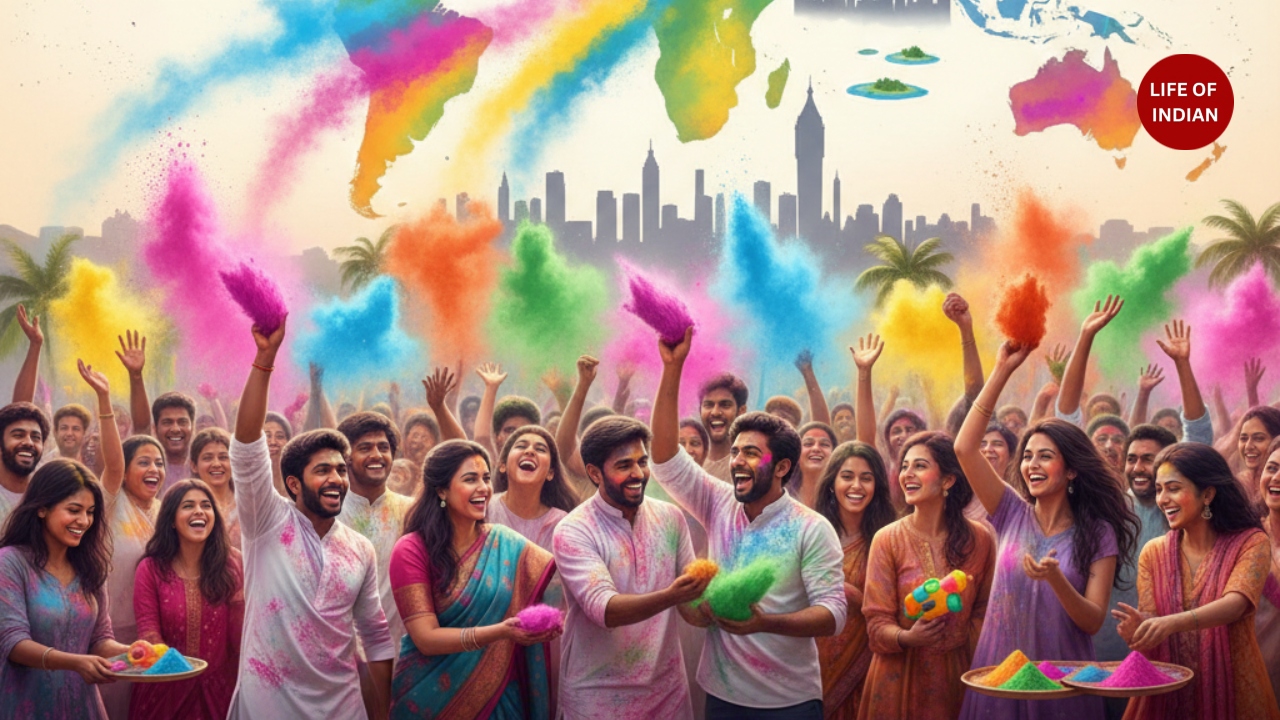
Why Has Holi Become a Global Festival?
Several factors have contributed to Holi’s global expansion:
- The Indian diaspora across continents.
- Cultural exchange and globalization.
- The universal appeal of its message—joy, unity, and renewal.
- Social media influence and large public festivals.
Holi’s themes of love, forgiveness, and celebration of life resonate beyond religious boundaries.
Holi may have originated in India, but today it is truly a global celebration. From Nepal’s Phagu Purnima to Caribbean Phagwah festivals and massive color events in the United States and United Kingdom, Holi continues to spread its vibrant message across the world.
The festival stands as a symbol of cultural continuity, diversity, and the power of joy to unite people across nations.
As the Festival of Colors approaches, it reminds us that no matter where we are in the world, the spirit of Holi—happiness, harmony, and renewal—remains universal.
FAQ
Q1: Which countries celebrate Holi outside India?
Holi is celebrated in Nepal, Bangladesh, Pakistan, Mauritius, Fiji, Guyana, Suriname, Trinidad & Tobago, the United States, the United Kingdom, Australia, and South Africa.
Q2: What is Holi called in Nepal?
In Nepal, Holi is known as Phagu Purnima and is celebrated for two days in different regions.
Q3: What is Holi called in the Caribbean?
In countries like Guyana, Suriname, and Trinidad & Tobago, Holi is popularly known as Phagwah.
Q4: Is Holi a public holiday outside India?
Yes, in Mauritius and Guyana, Holi is recognized as a public holiday.
Q5: Why has Holi become popular worldwide?
Holi has gained global popularity due to the Indian diaspora, cultural exchange, and the universal appeal of its joyful and colorful celebrations.