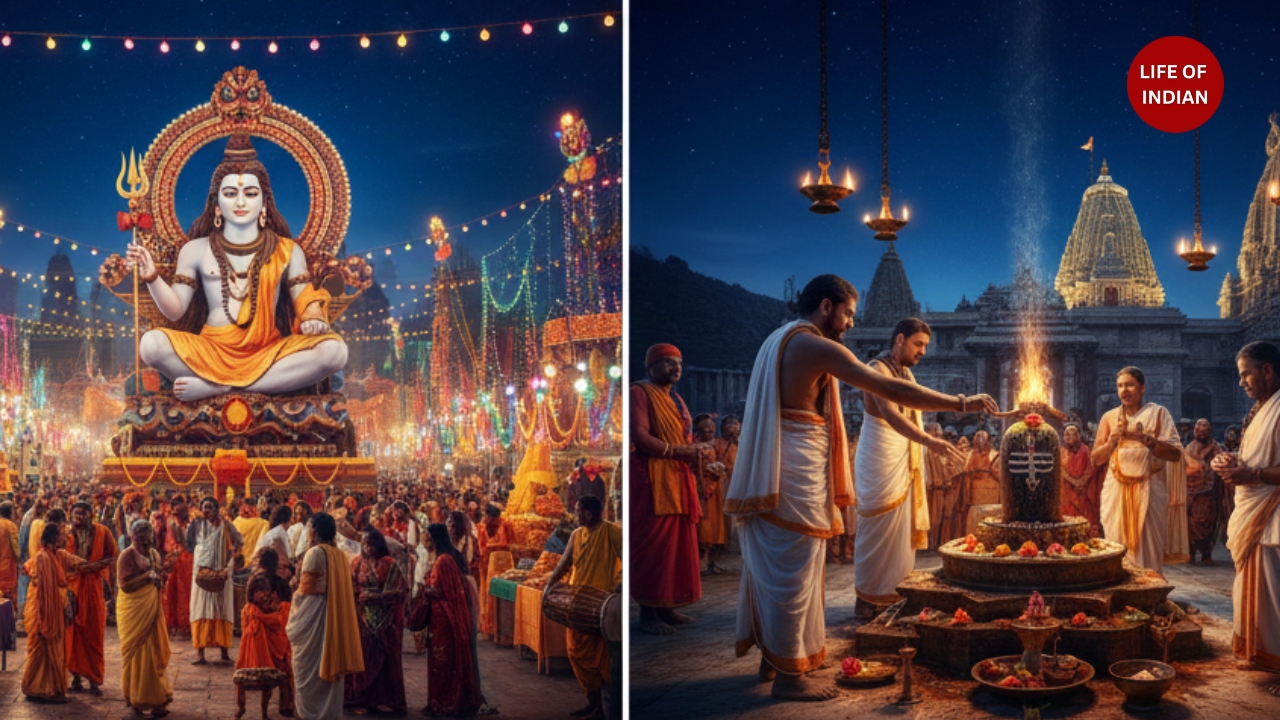
Mahashivratri 2026 Special: On this sacred night, India does not sleep.
From the icy temples of the Himalayas to the vibrant streets of Tamil Nadu, from the ghats of Varanasi to the villages of Gujarat—Mahashivratri is not just celebrated.
It is experienced.
Temple bells echo through midnight.
Diyas flicker in silent homes.
Devotees chant “Om Namah Shivaya” with folded hands and hopeful hearts.
But what makes this night even more powerful is how beautifully different every Indian state celebrates it.
Why Lord Shiva Wears Snake, Ash and Moon: The Hidden Spiritual Meaning Behind Mahadev’s Divine Form
Let’s travel across India and witness the many faces of Mahashivratri.
Uttar Pradesh – Kashi’s All-Night Devotion
In Varanasi, the city believed to be protected by Lord Shiva himself, Mahashivratri feels deeply personal.
At Kashi Vishwanath Temple, thousands line up for hours. Devotees carry holy Ganga water to offer on the Shivling. The entire city remains awake through the night.
Processions, devotional songs, and temple rituals create an atmosphere that feels timeless.
For many, celebrating Mahashivratri in Kashi is a lifelong dream.
Uttarakhand – Shiva in the Land of the Himalayas
In the Himalayan state of Uttarakhand, where Kedarnath Temple stands as one of the holiest Jyotirlingas, Mahashivratri carries a quiet spiritual intensity.
Though winter keeps Kedarnath closed, other Shiva temples across the state hold special prayers and community gatherings.
Here, the devotion feels closer to nature — surrounded by mountains, silence, and crisp night air.
Gujarat – The Grand Fair of Bhavnath
In Gujarat, Mahashivratri is celebrated with vibrant energy, especially at the Bhavnath Mahadev Temple in Junagadh.
A five-day fair attracts sadhus, devotees, and tourists. Naga sadhus perform rituals, and spiritual processions create a powerful atmosphere of faith.
The celebration blends devotion with cultural tradition, making it one of the most unique observances in India.
Tamil Nadu – Temple Rituals and Sacred Abhishekam
In Tamil Nadu, Mahashivratri is marked by elaborate temple rituals.
At temples like Brihadeeswarar and Chidambaram, priests perform special Abhishekam ceremonies — offering milk, honey, curd, sandalwood paste, and sacred ash to the Shivling.
Devotees fast and stay awake, participating in bhajans and meditation sessions.
Here, devotion is expressed through ancient temple architecture and deeply rooted traditions.
Madhya Pradesh – Midnight at Mahakaleshwar
In Ujjain, home to the Mahakaleshwar Jyotirlinga, Mahashivratri is celebrated with grandeur.
The Bhasma Aarti — a unique ritual where sacred ash is offered — becomes the highlight.
The temple remains open all night. Thousands gather for darshan, believing that prayers offered here bring protection and spiritual growth.
Karnataka – Community Bhajans and Temple Gatherings
In Karnataka, Mahashivratri is often celebrated through community gatherings and devotional singing.
Temples organize night-long bhajans and cultural programs. Many devotees observe a strict fast and meditate until dawn.
The celebration feels intimate, community-driven, and spiritually uplifting.
West Bengal & Odisha – Shiva as the Protector
In eastern India, Mahashivratri blends devotion with local traditions.
Young girls often observe fasts praying for a good life partner, inspired by Goddess Parvati’s devotion to Lord Shiva.
Temples are decorated with flowers, and families visit together, turning the night into a shared spiritual experience.
Jyotirlingas of India: The Sacred Shiva Temples Every Devotee Must Visit Once in a Lifetime
What Makes Mahashivratri So Powerful Across India?
Though rituals may vary, the emotion remains the same.
Mahashivratri is about:
Stillness in chaos.
Light in darkness.
Faith in uncertainty.
Some stay awake to meditate.
Some sing devotional songs.
Some simply sit in silence.
But across every state, the intention is the same — to connect with something greater than ourselves.
A Festival That Unites India Spiritually
India is diverse in language, food, dress, and customs.
Yet on Mahashivratri night, there is unity.
Whether it is a grand fair in Gujarat, a midnight aarti in Ujjain, or a quiet prayer at home — millions bow to the same divine energy.
Different traditions.
Different expressions.
One devotion.
And that is the beauty of Mahashivratri in India.
Frequently Asked Questions
Q1: Why is Mahashivratri celebrated differently in each state?
India has diverse cultural traditions, so each state follows its own rituals while maintaining the same spiritual devotion to Lord Shiva.
Q2: Which state celebrates Mahashivratri most grandly?
States like Uttar Pradesh, Madhya Pradesh, Gujarat, and Tamil Nadu are known for large temple gatherings and special rituals.
Q3: Is Mahashivratri a national holiday in India?
It is a gazetted holiday in many states, but observance may vary depending on regional policies.
Q4: Can tourists attend Mahashivratri celebrations?
Yes, many temple celebrations and fairs are open to visitors, especially in cities like Varanasi and Ujjain.