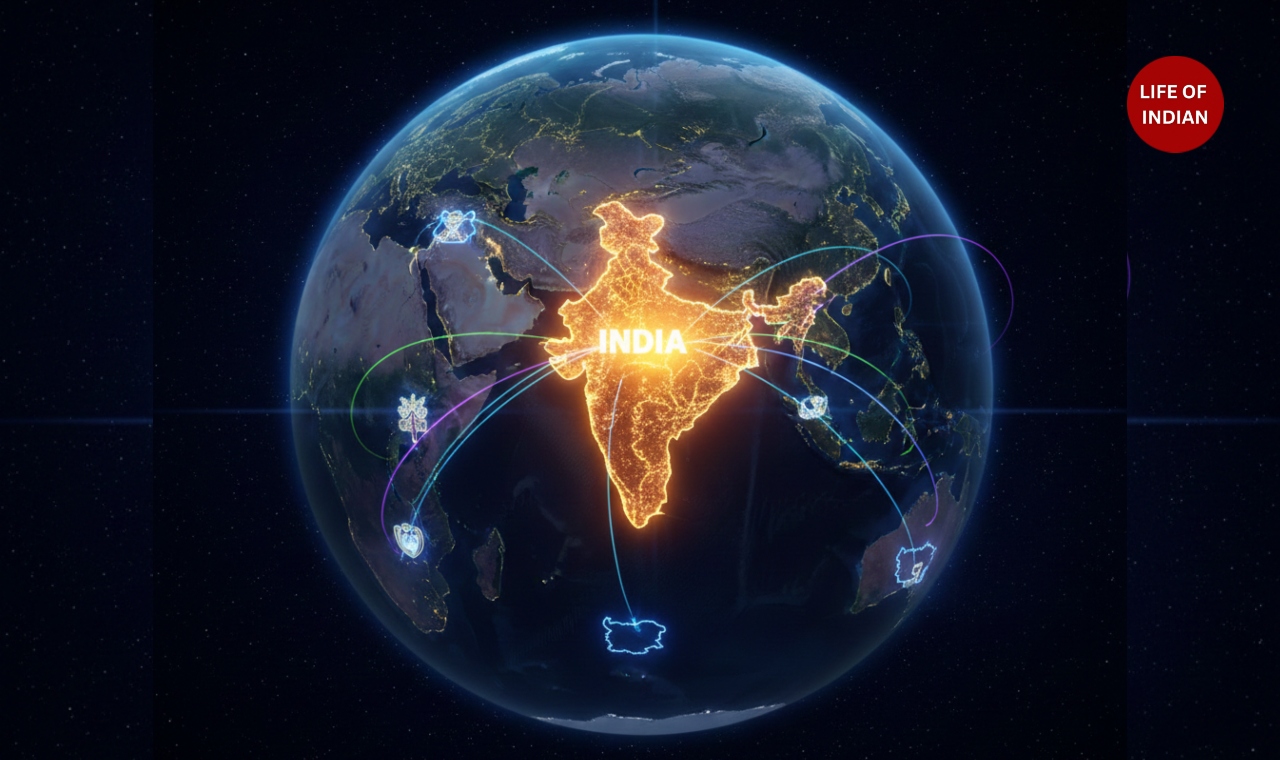
India has one of the largest diaspora communities in the world. According to global migration estimates, over 32 million people of Indian origin live outside India—making it one of the most widespread communities globally.
From the United States and Canada to the UAE and Australia, Indians have built strong economic and cultural footprints almost everywhere.
But surprisingly, there are still a few countries where the Indian population is extremely low—sometimes limited to just a handful of individuals.
Here are five such countries and the real reasons behind it.
Vatican City—The World’s Smallest Country
Vatican City has a population of around 800 people, making it the smallest country in the world by both area and population.
Citizenship here is not permanent or birth-based. It is granted only to individuals who work for the Holy See—mainly clergy members, Swiss Guards, and administrative officials.
Because residency is strictly tied to church service roles, there is no scope for general immigration. While Indian priests may visit or temporarily serve in Vatican institutions, there is no permanent Indian residential community here.
Reason for low Indian population:
Extremely limited population size and role-based citizenship system.
Tuvalu—A Remote Island Nation
Tuvalu is a small Pacific island country with a population of around 11,000 people. It consists of nine coral atolls and is one of the least visited countries in the world.
The country has limited infrastructure, very few industries, and minimal job opportunities. Migration to Tuvalu from large nations like India is extremely rare.
There is no known established Indian community in Tuvalu, and any presence would likely be temporary or work-based.
Reason for low Indian population:
Geographic isolation and limited economic opportunities.
Nauru—One of the Smallest Economies in the World
Nauru has a population of roughly 12,000 people and one of the smallest economies globally.
The country relies heavily on limited natural resources and international aid. There are very few industries and almost no large-scale employment sectors that typically attract migrants.
As a result, Indian migration to Nauru is extremely uncommon, and there is no significant Indian diaspora presence.
Reason for low Indian population:
Small economy + limited immigration demand.
San Marino—A Microstate Inside Italy
San Marino is one of the world’s oldest republics and has a population of about 34,000 people.
Although it is located within Italy, San Marino has its own residency and citizenship regulations. Permanent residency is tightly controlled and generally granted under specific economic or familial conditions.
Compared to major European nations, the Indian population here is extremely small and not organized as a community.
Reason for low Indian population:
Strict residency laws and small population size.
Kiribati—A Rare Migration Destination
Kiribati, another Pacific island nation, has a population of around 130,000 people spread across multiple islands.
The economy is largely dependent on fishing and small-scale agriculture. International migration to Kiribati is minimal due to limited job markets and geographic distance.
There is no visible or documented Indian diaspora community here.
Reason for low Indian population:
Remote location + limited economic structure.
Why Indians Prefer Other Countries Instead
Indians usually migrate to countries that offer:
- Strong economic growth
- Large job markets
- Established Indian communities
- Education opportunities
- Immigration-friendly policies
That is why countries like the USA, UAE, Canada, Australia, and the UK host millions of Indians.
Migration patterns are driven more by opportunity and community networks than by random geographic spread.
Important Note
It is important to understand that “almost zero population” does not always mean absolutely zero individuals. In microstates and remote nations, population data is often dynamic and may not always reflect temporary residents.