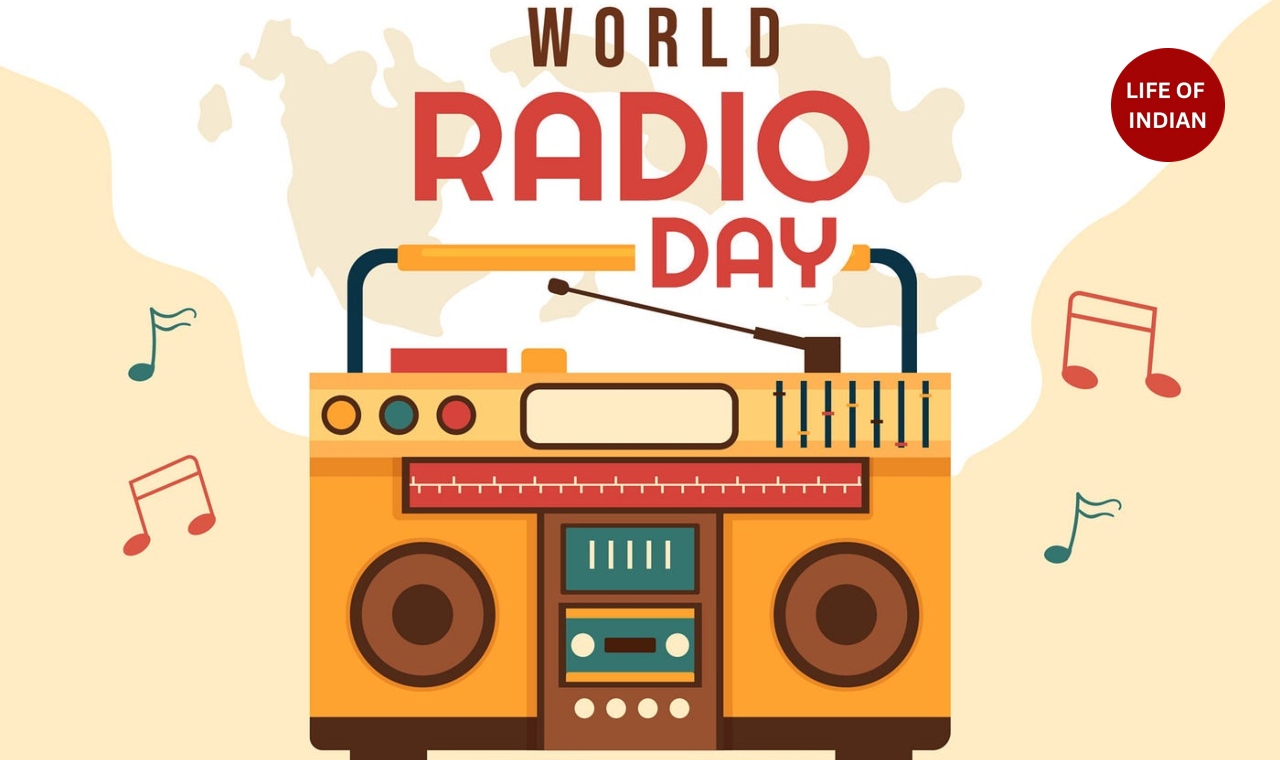
World Radio Day 2026: Radio has always carried a rare magic — intimate yet expansive, simple yet deeply powerful. It doesn’t demand attention like screens do, yet it quietly becomes part of everyday life. From the soft morning bhajans playing in villages to late-night music shows in cities, radio slips into homes like a familiar companion.
Long before smartphones and social media, radio was the trusted voice of the nation. It informed, educated, entertained, and most importantly — connected people across languages, cultures, and distances.
Even today, when everything seems digital, radio continues to survive and thrive.
Every year on 13 February, the world celebrates World Radio Day, honouring one of humanity’s most reliable and inclusive mediums of communication.
The Night Radio United India
Some moments in history are not seen — they are heard.
One such unforgettable moment was the night of August 14–15, 1947, when millions of Indians gathered around their radio sets to listen to the announcement of India’s Independence.
As the radio crackled with the voice of freedom, it did not just broadcast news — it united an entire nation emotionally.
From that night onward, radio became more than a device. It became a witness to India’s journey.
Historical Background of World Radio Day
World Radio Day was proclaimed by UNESCO in 2011 and later adopted by the United Nations General Assembly in 2012. The date, 13 February, commemorates the establishment of United Nations Radio in 1946, which aimed to promote global communication and information sharing after World War II.
The day recognises radio as:
- a tool of education
- a voice of democracy
- a bridge between communities
- and a lifeline during emergencies
Theme of World Radio Day 2026
The theme for World Radio Day 2026 is:
“Radio and Artificial Intelligence: AI is a tool, not a voice”
This theme highlights how AI can support radio through:
- faster content creation
- translation
- archiving
- accessibility for disabled listeners
But it also reminds us that technology must never replace the human voice. Radio’s trust and authenticity come from real people — not machines.
Because radio is not just sound. It is emotion.
All India Radio: The Voice of the Nation
In India, radio’s identity is deeply connected with All India Radio (AIR), popularly known as Akashvani.
Since 1936, AIR has been serving the country with its guiding motto:
“Bahujan Hitaya, Bahujan Sukhaya” — For the welfare and happiness of the masses.
Today AIR is one of the largest broadcasting networks in the world, with:
- 591 broadcasting centres
- Coverage of 92% geographical area
- Reach to 99% of India’s population
- Programming in 23 languages and 182 dialects
From news and agriculture advisories to music, education and health awareness — AIR remains relevant to both villages and metros.
During disasters like cyclones and floods, when mobile networks fail, radio often becomes the only source of trusted information.
Radio in Rural India: A Lifeline, Not Luxury
In many parts of India, radio is not old-fashioned — it is essential.
During the COVID-19 pandemic, when schools shut down and internet access was limited, thousands of students in Bihar and Jharkhand continued learning through AIR’s educational broadcasts.
Fishermen in Odisha and Tamil Nadu rely on radio weather bulletins before sailing. During Cyclone Fani, timely alerts helped save countless lives.
In Uttarakhand’s hills, radio warns about landslides and shares farming advice.
For these communities, radio is survival.
Rise of Private FM and Community Radio
While AIR provides national service, Private FM and Community Radio have added local flavour.
Private FM channels bring:
- local entertainment
- traffic updates
- youth shows
- regional music
Meanwhile, Community Radio Stations (CRS) empower villages and small towns.
India now has 500+ community radio stations, giving voice to:
- farmers
- women
- tribal communities
- local artists
In Bundelkhand, women-led stations discuss girls’ education and welfare schemes.
In Kutch, radio preserves dialects and folk traditions.
Even Tihar Jail runs inmate-produced radio programmes for rehabilitation.
Radio here is not business — it is empowerment.
Mann Ki Baat: Radio in the Digital Era
When Prime Minister Narendra Modi chose radio for his monthly address “Mann Ki Baat”, it reaffirmed something important:
Radio still reaches everyone.
Started in 2014, the programme connects directly with citizens, especially those without internet access.
It proves that even in the digital age, radio remains the most inclusive medium.
The Radio Man of India: A Unique Story
Radio’s emotional power can also be seen in the inspiring story of Ram Singh Bouddh, known as the Radio Man of India.
Recognised by Guinness World Records, he owns 1,257 vintage radios — the largest collection in the world.
His museum in Uttar Pradesh preserves decades of broadcasting history, reminding younger generations how radio shaped India.
It is not just a hobby — it is heritage.
Why Radio Still Matters Today
Despite podcasts, YouTube and streaming apps, radio continues to thrive because:
It works without internet.
It reaches remote areas.
It crosses language barriers.
It feels personal.
Most importantly — it builds trust.
Radio speaks to people, not at them.
And that is its timeless strength.
World Radio Day is not just about celebrating a device. It is about celebrating connection.
From Independence announcements to disaster alerts, from village education to national conversations, radio has been India’s constant companion.
In a fast-moving digital world, radio reminds us that sometimes, the simplest technologies create the strongest bonds.
Because even today, somewhere in India, someone is turning a small knob…
…and the voice of radio is lighting up their world.