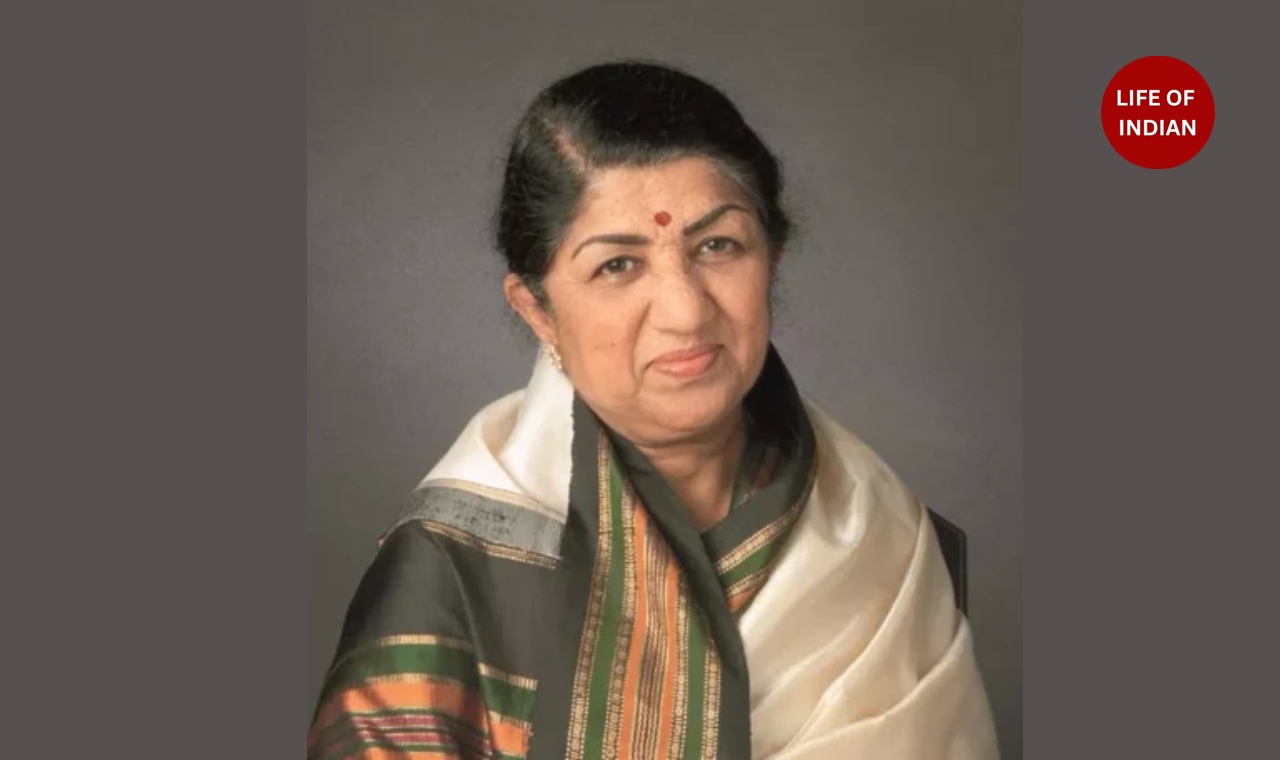
Some voices are not just heard—they are felt. They do not belong to one era, one generation, or one language. They quietly enter our lives, stay with us through joy and sorrow, and become a part of who we are. Lata Mangeshkar was not merely a singer. She was the sound of India’s emotions, the voice behind countless memories, prayers, heartbreaks, hopes, and dreams.
On 6 February, as the nation observes her death anniversary (Punyatithi), India does not merely remember an artist—it bows before a legend whose voice shaped the emotional history of a country.
A Childhood Marked by Music and Responsibility
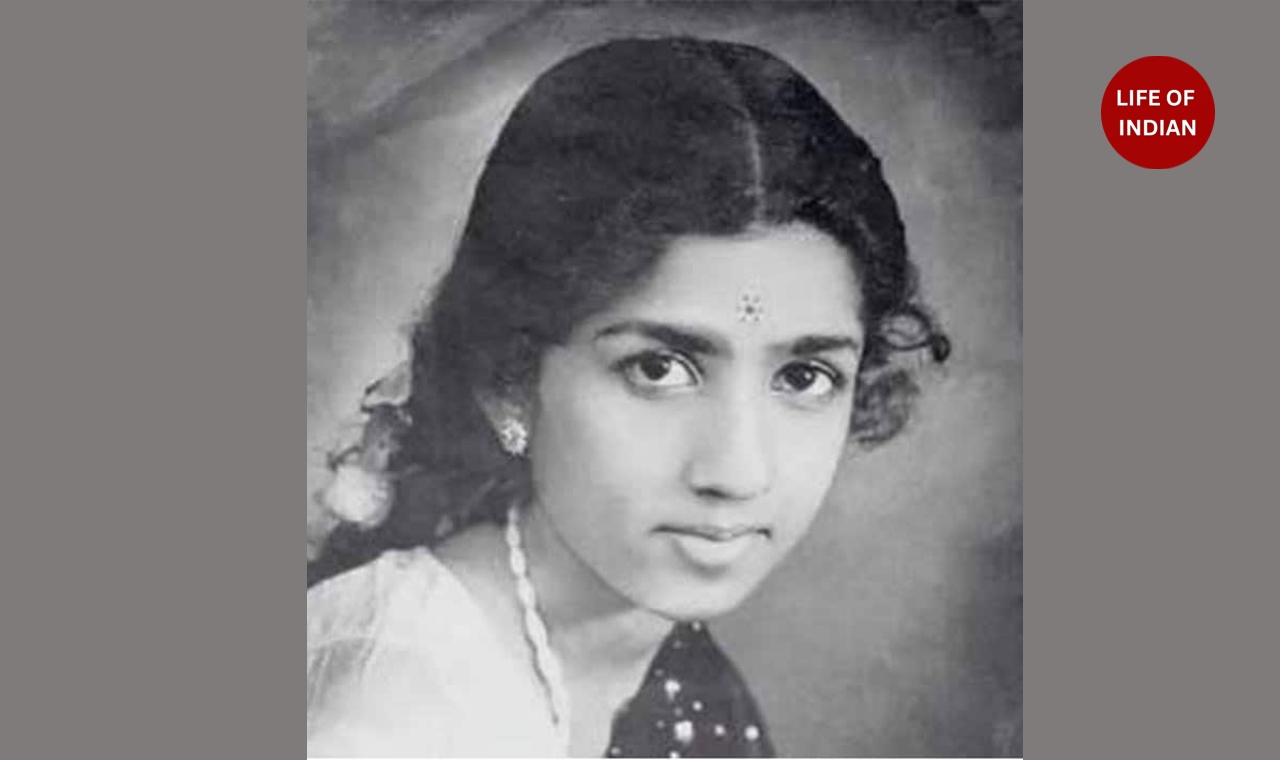
Lata Mangeshkar was born on 28 September 1929 in Indore, into a family deeply rooted in music and theatre. Her father, Pandit Deenanath Mangeshkar, was a respected classical singer and stage performer. Music was not a career choice for Lata—it was the language spoken at home.
However, destiny had other plans. When Lata was just 13 years old, her father passed away. Overnight, childhood ended. The burden of supporting her family fell on her young shoulders. There was no time to grieve, no luxury to dream freely. Survival became the priority.
This early responsibility shaped her character—disciplined, focused, and deeply resilient. While other children her age were attending school, Lata stepped into studios, rehearsals, and long hours of practice, determined to make music her path forward.
Rejected Before Being Revered
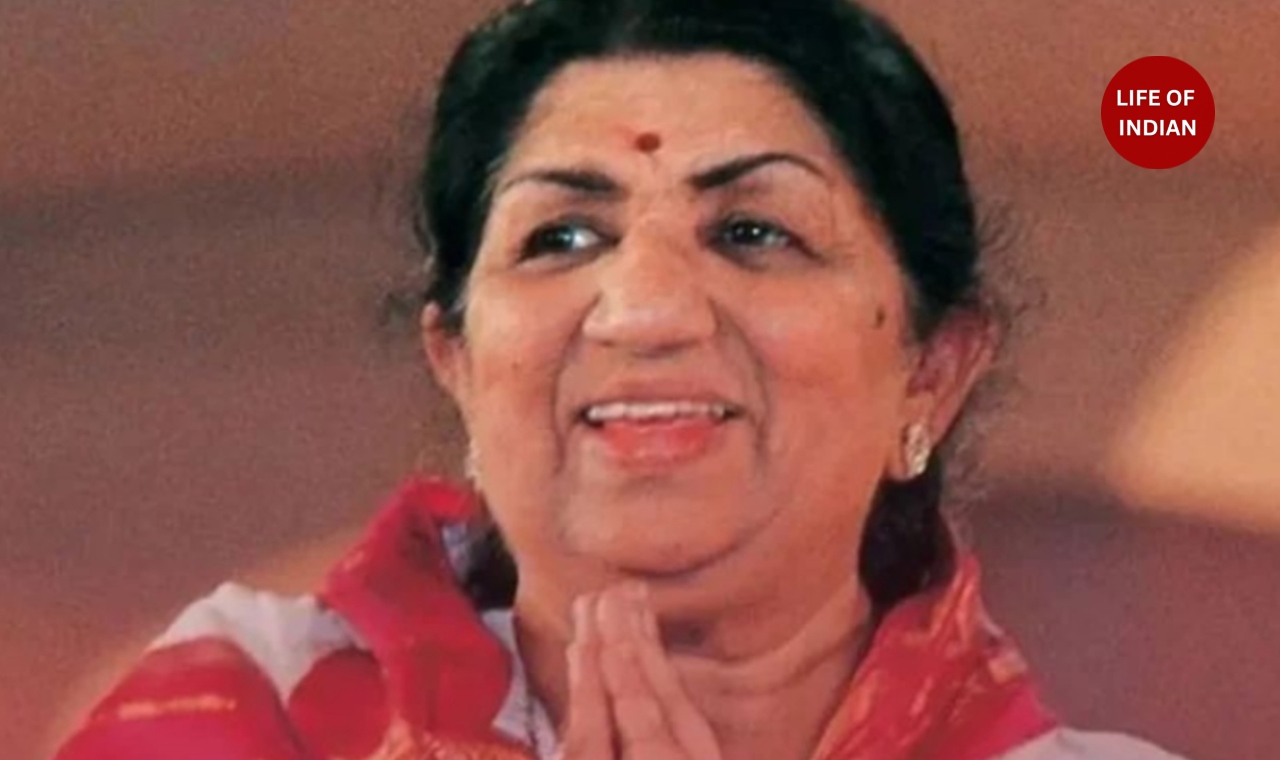
Few people know that Lata Mangeshkar was rejected multiple times in the early phase of her career. At a time when heavy, mature voices dominated Hindi cinema, her soft and high-pitched voice was often dismissed as unsuitable.
She was told:
“Your voice is too thin.”
“This kind of singing won’t work in films.”
But instead of giving up, she chose rigorous practice. She trained herself relentlessly, refined her pronunciation, mastered classical techniques, and developed an emotional depth that would later become her signature.
Her breakthrough came in 1949 with the song “Aayega Aanewala” from the film Mahal. That single song changed Indian music forever. From that moment, Lata Mangeshkar was no longer struggling for acceptance—India had found its voice.
A Career That Spanned Generations
What followed was a journey unlike any other in the history of Indian music.
For nearly seven decades, Lata Mangeshkar remained at the heart of Indian cinema and culture. She sang over 30,000 songs in more than 36 languages, ranging from Hindi, Marathi, Bengali, and Tamil to Urdu, Nepali, and even foreign languages.
Her voice adapted effortlessly to every emotion:
-
the innocence of first love
-
the pain of separation
-
the strength of devotion
-
the pride of patriotism
-
the warmth of a mother’s affection
Songs like Lag Jaa Gale, Ajeeb Dastaan Hai Yeh, Ae Mere Watan Ke Logon, and Tere Bina Zindagi Se were not just melodies — they became emotional landmarks in people’s lives.
Generations grew up listening to her. Parents passed her songs to their children, and grandparents hummed her tunes long after the radios went silent.
Awards Couldn’t Measure Her Legacy
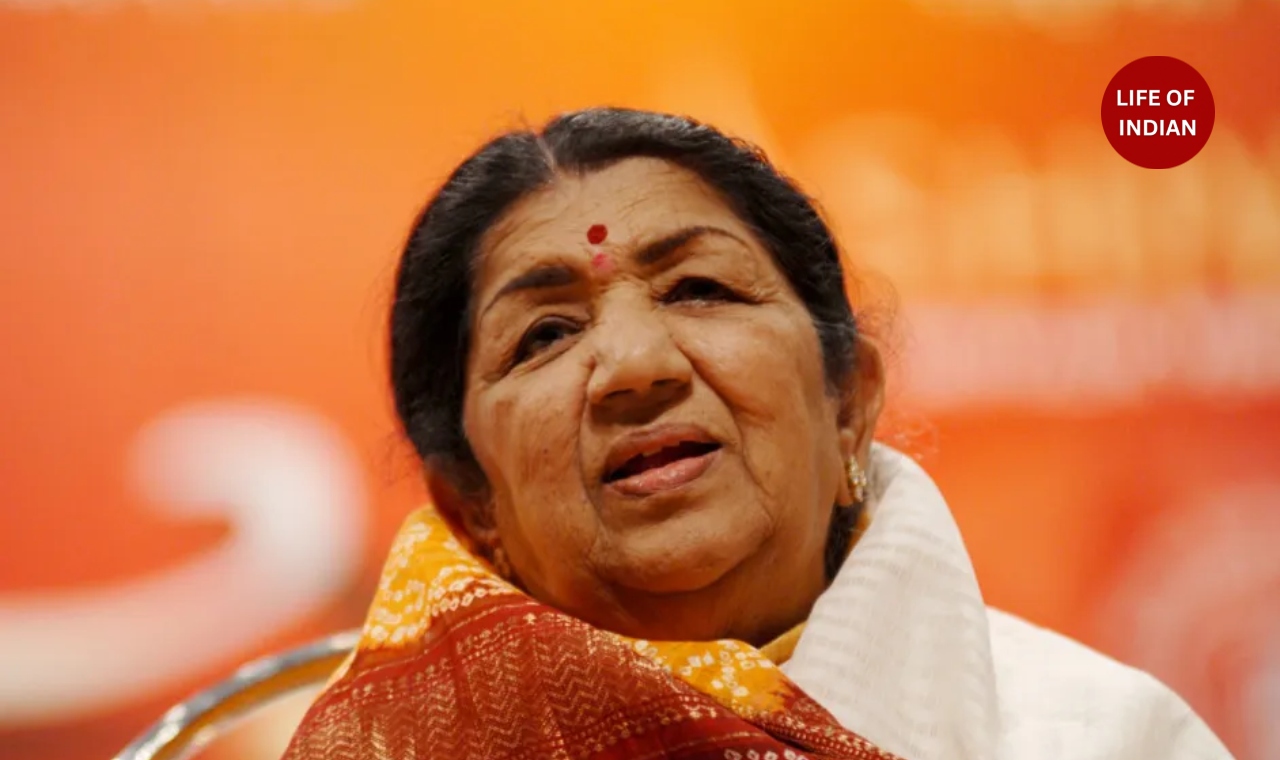
Lata Mangeshkar received almost every honour India could bestow—including the Bharat Ratna, the country’s highest civilian award. Yet, no trophy or title truly captured her contribution.
Her real achievement lay elsewhere—in the fact that her voice felt personal to millions. People believed she was singing for them, speaking emotions they could never express in words.
Despite global recognition, she remained humble, soft-spoken, and deeply spiritual. Fame never changed her simplicity. She often described herself not as a star, but as a servant of music.
Why Lata Mangeshkar Is an Inspiration Even Today
Lata Mangeshkar’s life is not just a musical journey—it is a lesson in perseverance, discipline, and silent strength.
She teaches us that:
-
Talent alone is not enough; hard work shapes greatness
-
Rejection is not failure; it is preparation
-
Success does not need arrogance; humility lasts longer than fame
-
True legacy is built through consistency, not shortcuts
In an age of instant success and viral fame, Lata Mangeshkar stands as a reminder that excellence takes time, and dedication leaves an imprint that outlives generations.
Her story inspires artists, dreamers, and ordinary people alike—anyone who has ever been told they are “not good enough.”
A Farewell That United a Nation
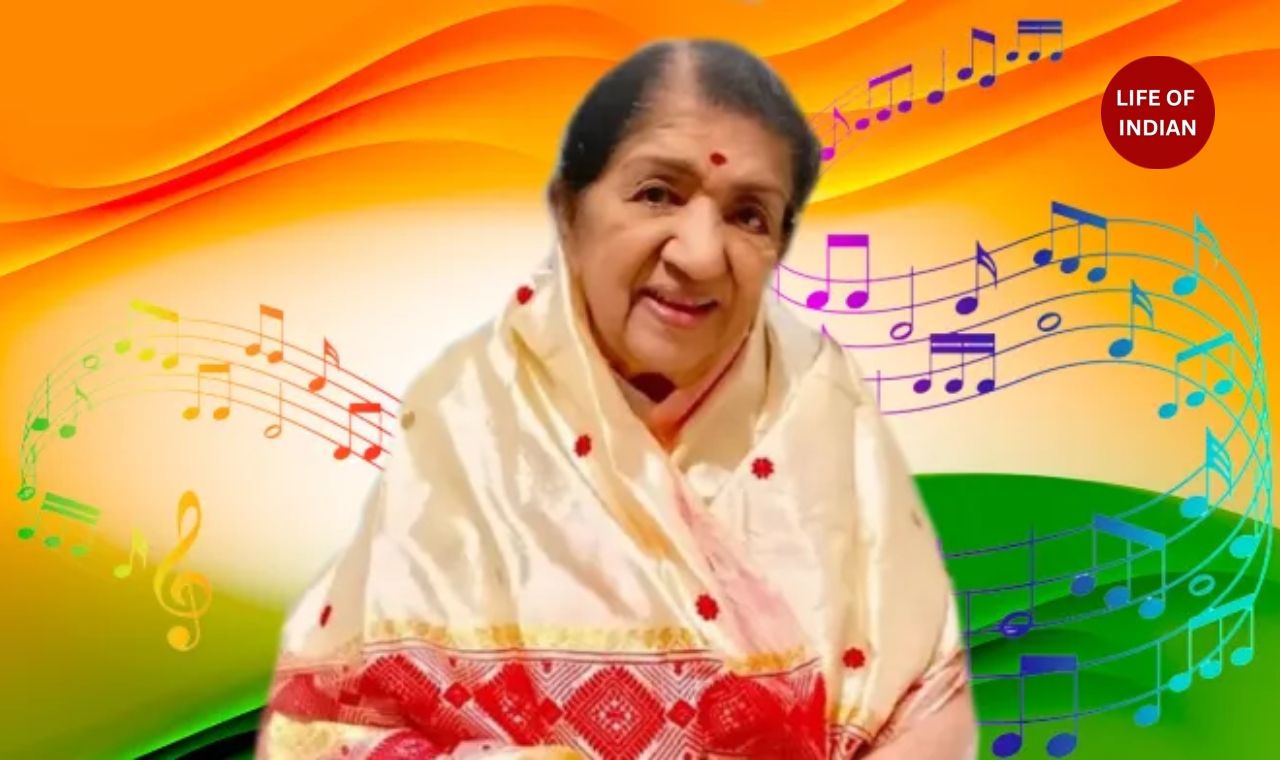
On 6 February 2022, when Lata Mangeshkar passed away at the age of 92, India stood still. Her final rites were performed with full state honours, and millions mourned—not as fans, but as family.
Yet, even in death, she remains alive.
Every time her voice plays on the radio, in a temple, at a concert, or in a quiet room filled with memories, she returns — gentle, eternal, and comforting.
Lata Lives On
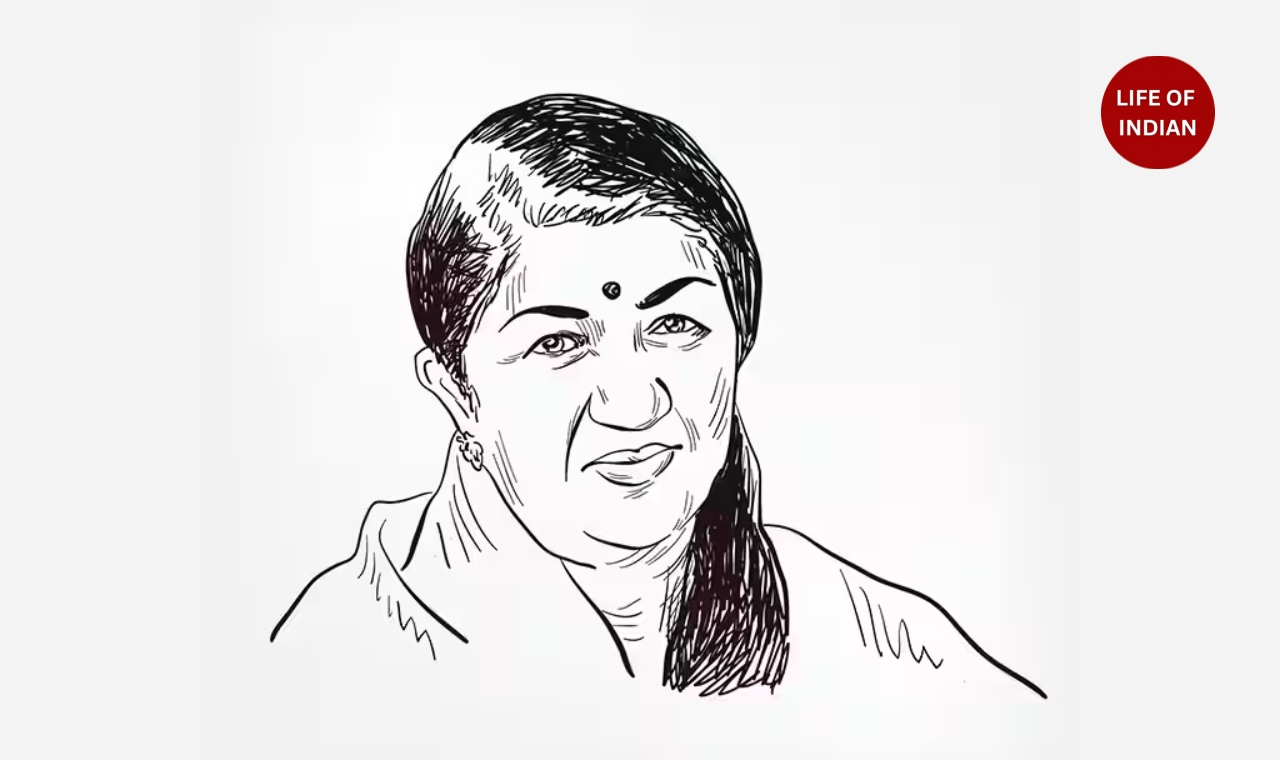
Lata Mangeshkar did not just sing songs. She gave emotions a voice, pain a melody, and silence a meaning. As India remembers her on her death anniversary, one truth stands unchanged:
As long as music exists, as long as emotions seek expression, Lata Mangeshkar will never fade.
She was, and will always remain, the voice of India’s soul.