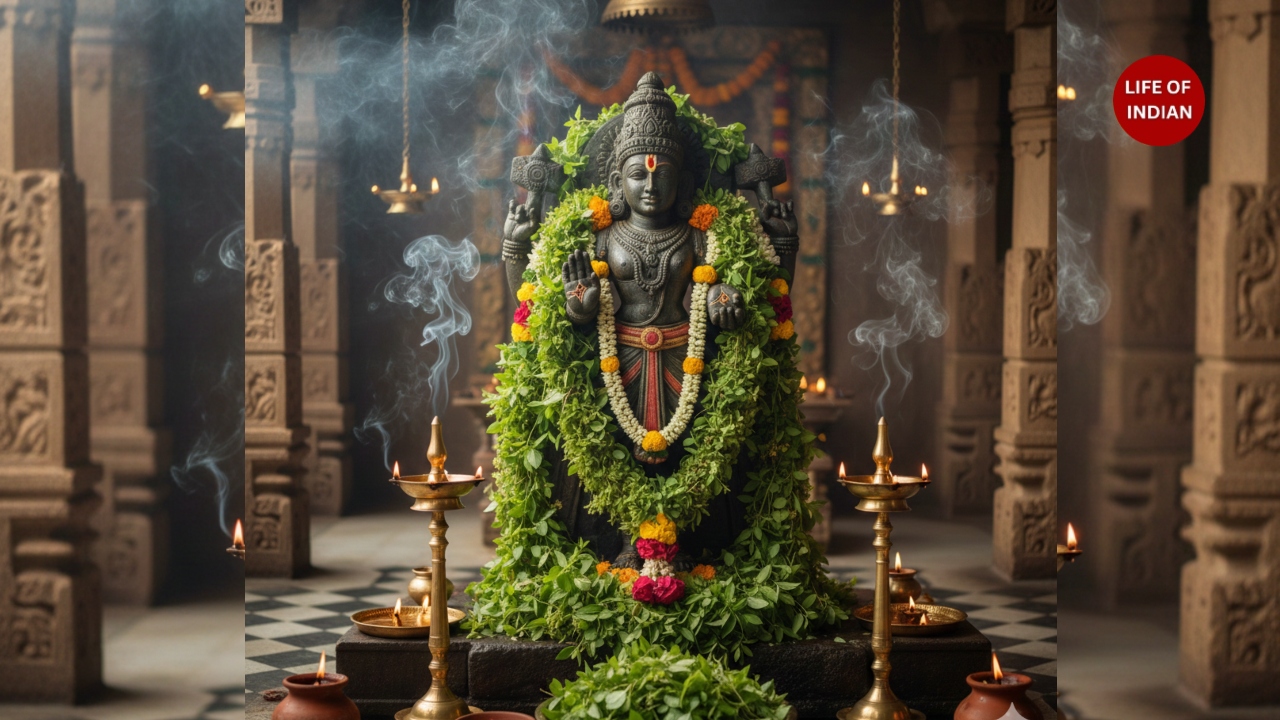
Ekadashi is considered one of the most sacred days in Hinduism, especially for devotees of Lord Vishnu. On this day, fasting, prayers, and devotion are incomplete without offering Tulsi (Holy Basil) leaves to Lord Vishnu. But have you ever wondered why Tulsi holds such a special place in Vishnu worship, particularly on Ekadashi?
The answer lies in a beautiful blend of mythology, scriptures, devotion, and even science.
Importance of Ekadashi in Hinduism

Ekadashi falls on the 11th lunar day of both the waxing (Shukla Paksha) and waning (Krishna Paksha) phases of the moon, making it occur twice every month.
According to Hindu scriptures:
-
Ekadashi is dedicated to Lord Vishnu, the preserver of the universe.
-
Fasting on Ekadashi helps in spiritual purification, control over senses, and liberation from sins.
-
It is believed that observing Ekadashi vrata with devotion helps devotees attain moksha (salvation).
Why Tulsi Is Dear to Lord Vishnu
Tulsi is not just a plant in Hindu tradition; she is revered as a divine goddess. No offering to Lord Vishnu is considered complete without Tulsi leaves.
Scriptural References
Texts like the Padma Purana, Skanda Purana, and Vishnu Purana mention that:
-
Lord Vishnu accepts offerings only when Tulsi is present.
-
Worship without Tulsi is considered incomplete.
Mythological Story: Tulsi and Lord Vishnu
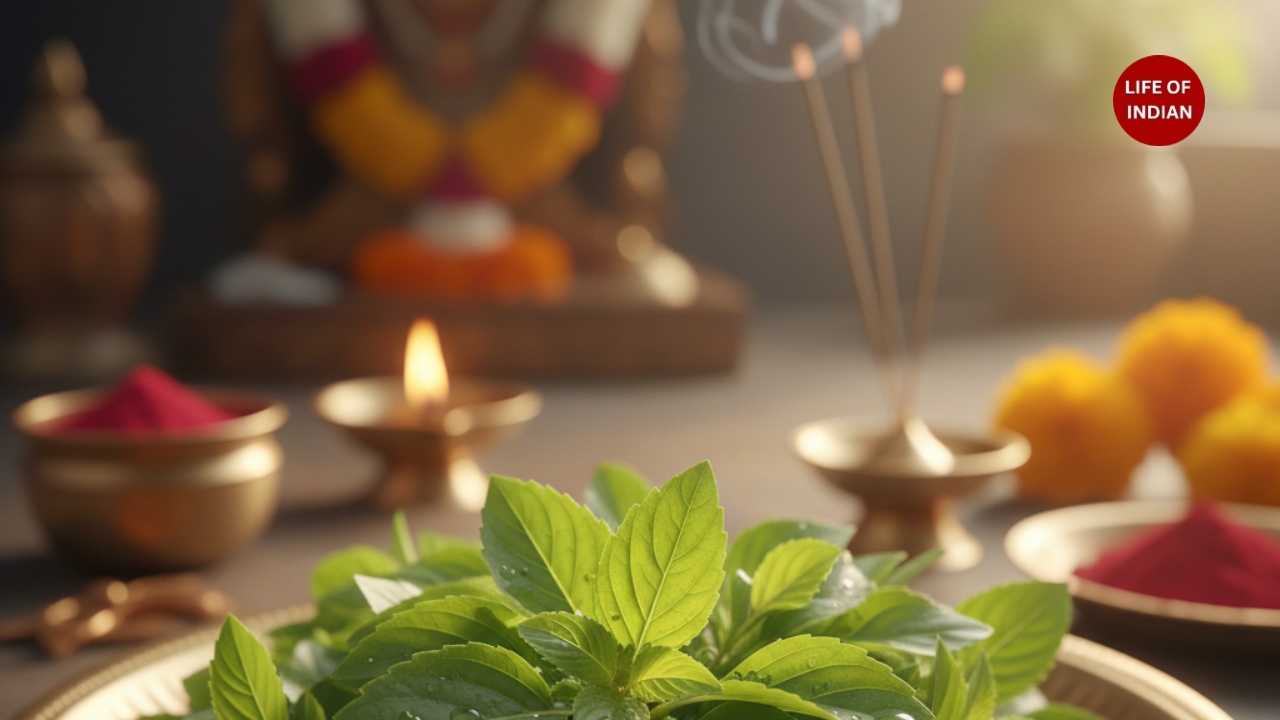
One of the most popular legends explains Tulsi’s divine connection with Lord Vishnu.
The Story of Vrinda
-
Tulsi was born as Vrinda, a pious and devoted woman married to demon king Jalandhar.
-
Due to Vrinda’s chastity and devotion, Jalandhar became invincible.
-
To restore cosmic balance, Lord Vishnu intervened, leading to Vrinda’s grief.
-
Before leaving her mortal form, Vrinda cursed Vishnu—but later, realizing his divine purpose, she forgave him.
-
Lord Vishnu blessed her and declared that she would be worshipped as Tulsi, eternally dear to him.
Since then, Tulsi became inseparable from Vishnu worship.
Why Tulsi Is Specially Offered on Ekadashi
1. Ekadashi Is Lord Vishnu’s Favorite Day
Ekadashi is entirely dedicated to Vishnu, and Tulsi is his most beloved offering. Offering Tulsi on this day multiplies the spiritual merit (punya).
2. Symbol of Pure Devotion
Tulsi represents bhakti (devotion), purity, and surrender—the core principles of Ekadashi fasting.
3. Enhances the Power of Worship
According to beliefs:
-
Even a simple leaf of Tulsi offered with faith is equivalent to elaborate rituals.
-
Vishnu is said to be more pleased with Tulsi leaves than gold or jewels.
Scientific and Ayurvedic Perspective
Tulsi is not only spiritually significant but also scientifically powerful.
Health Benefits of Tulsi
-
Boosts immunity
-
Reduces stress and anxiety
-
Improves digestion and respiratory health
-
Acts as a natural detoxifier
Fasting on Ekadashi while being around Tulsi plants creates a calming and purifying environment, supporting both body and mind.
Spiritual Symbolism of Tulsi
Tulsi symbolizes:
-
Satva guna (purity and balance)
-
Renunciation and simplicity
-
Connection between the material and spiritual worlds
Keeping a Tulsi plant at home is believed to:
-
Remove negative energies
-
Bring peace and prosperity
-
Invite divine vibrations
Rules for Offering Tulsi on Ekadashi
-
Tulsi leaves should not be plucked on Ekadashi; they are usually collected a day before.
-
Only fresh, clean leaves should be offered.
-
Tulsi is never offered to Lord Shiva, as per tradition.
-
Offerings should be made with pure intention and devotion, not compulsion.
Spiritual Benefits of Offering Tulsi on Ekadashi
Devotees believe that this practice:
-
Destroys past sins
-
Grants peace and mental clarity
-
Strengthens devotion towards Lord Vishnu
-
Helps in spiritual progress and liberation
Offering Tulsi to Lord Vishnu on Ekadashi is not just a ritual—it is a deep spiritual practice rooted in mythology, devotion, and holistic well-being. Tulsi represents pure love and surrender, while Ekadashi represents self-control and spiritual awakening.
Together, they form a powerful path toward inner purification, divine grace, and spiritual fulfillment.