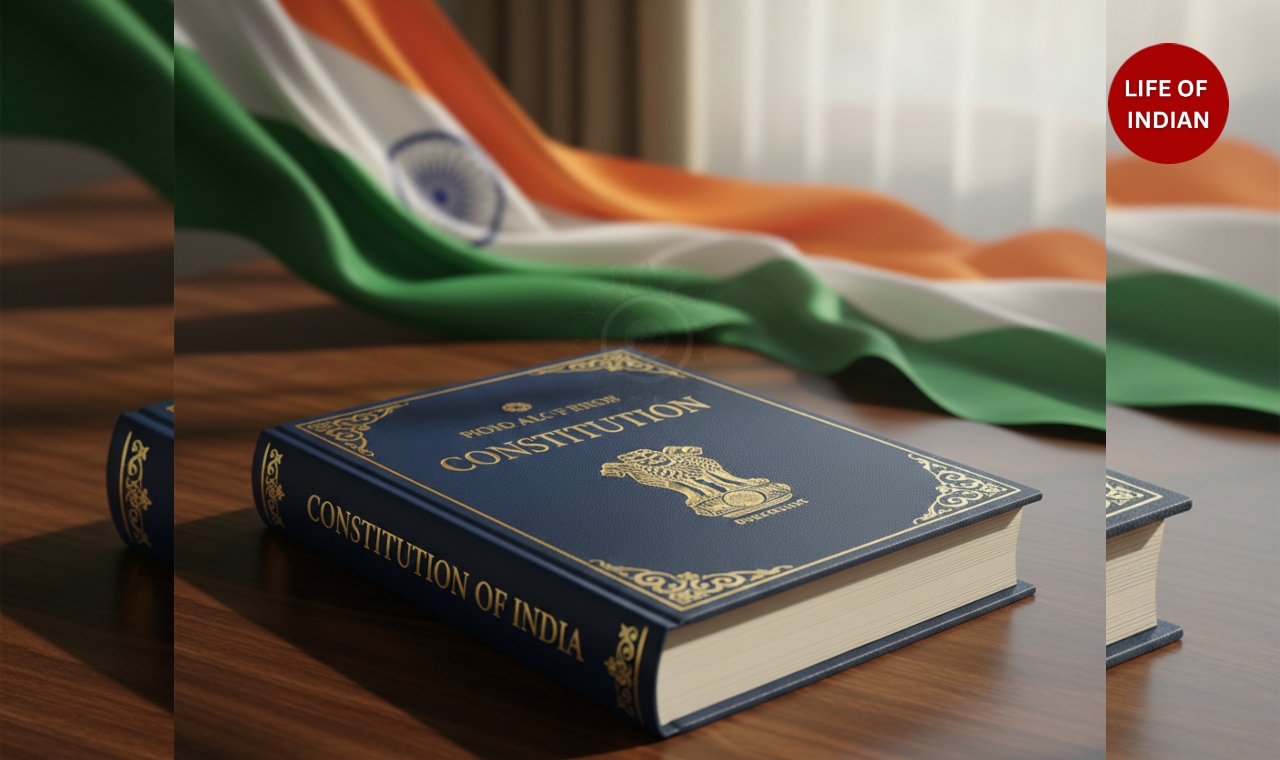
Indian Constitution: The Constitution of India is the backbone of the world’s largest democracy. It defines how India is governed, how power is distributed, and what rights and duties citizens possess. More than just a legal document, the Indian Constitution reflects the country’s historical struggles, social diversity, and democratic aspirations. Adopted on 26 November 1949 and enforced on 26 January 1950, it transformed India into a sovereign, socialist, secular, democratic republic.
Understanding the key features of the Indian Constitution helps citizens appreciate not only their rights but also their responsibilities toward the nation.
1. Written and Lengthiest Constitution
The Indian Constitution is a written constitution, meaning its provisions are clearly documented in a single comprehensive text. It is also the longest written constitution in the world, originally containing 395 Articles, 22 Parts, and 8 Schedules (now expanded through amendments).
The reason for its length lies in India’s diversity. The Constitution addresses:
-
Federal and state governance
-
Fundamental rights and duties
-
Administrative details
-
Special provisions for various regions and communities
This detailed nature ensures clarity and stability in governance.
2. Sovereign, Socialist, Secular, Democratic Republic

These words, mentioned in the Preamble, define the true spirit of the Indian Constitution:
-
Sovereign: India is free to make its own internal and external decisions.
-
Socialist: The state works toward reducing inequality and ensuring social justice.
-
Secular: The state does not favor any religion and ensures freedom of religion for all.
-
Democratic: Power rests with the people, exercised through elections.
-
Republic: The head of the state (President) is elected, not hereditary.
Together, these principles shape India’s political and social identity.
3. Preamble: The Soul of the Constitution
The Preamble is often called the soul or key to the Constitution. It outlines the objectives of the Constitution:
-
Justice (social, economic, and political)
-
Liberty (of thought, expression, belief, faith, and worship)
-
Equality (of status and opportunity)
-
Fraternity (unity and integrity of the nation)
Though not legally enforceable, the Preamble guides the interpretation of constitutional provisions.
4. Fundamental Rights
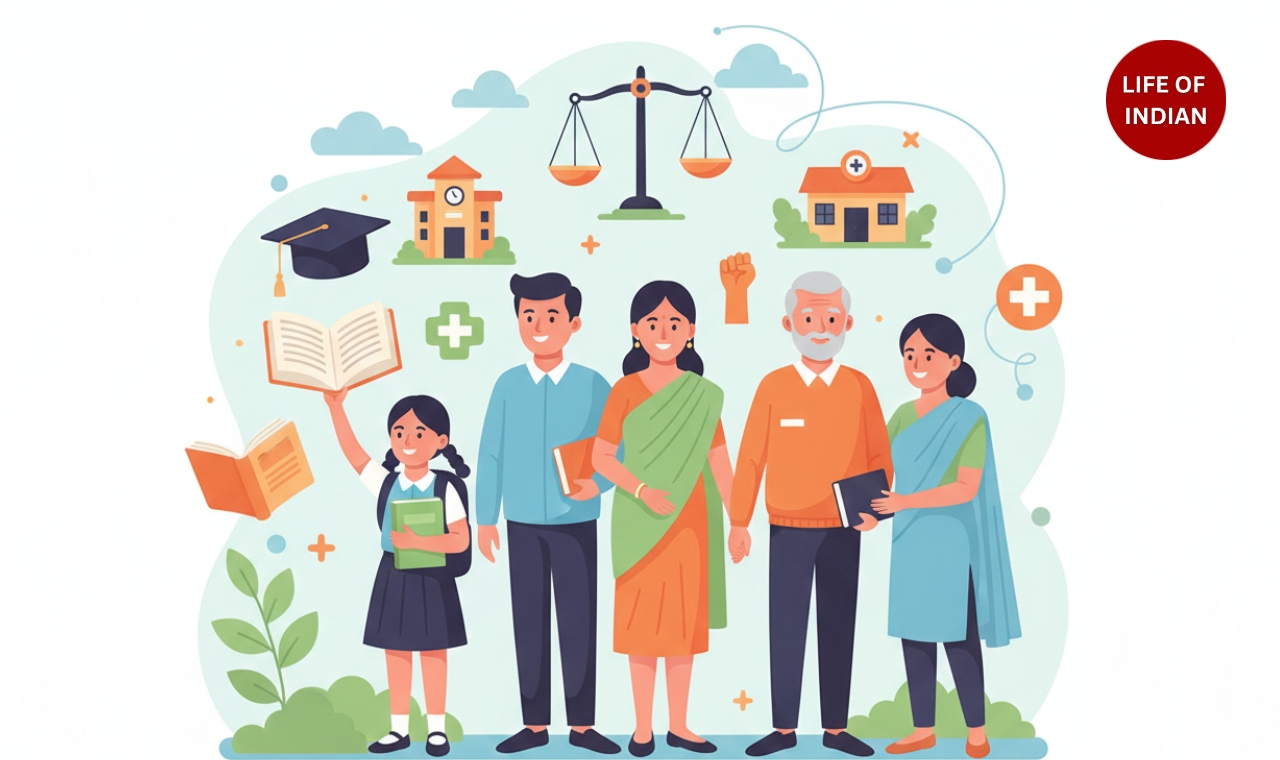
One of the most important features of the Indian Constitution is the guarantee of Fundamental Rights (Articles 12–35). These rights protect citizens from arbitrary state action and ensure personal freedom and dignity.
Key Fundamental Rights include:
-
Right to Equality
-
Right to Freedom
-
Right against Exploitation
-
Right to Freedom of Religion
-
Cultural and Educational Rights
-
Right to Constitutional Remedies
These rights empower citizens and make democracy meaningful.
5. Directive Principles of State Policy
The Directive Principles of State Policy (DPSPs) are guidelines for the government to create a just and welfare-oriented society. Although they are not legally enforceable, they are fundamental to governance.
They promote:
-
Social and economic justice
-
Equal pay for equal work
-
Protection of environment
-
Promotion of education and public health
DPSPs help bridge the gap between political democracy and social democracy.
6. Fundamental Duties
Added by the 42nd Constitutional Amendment (1976), Fundamental Duties remind citizens that rights come with responsibilities. These include:
-
Respecting the Constitution and national symbols
-
Promoting harmony and unity
-
Protecting the environment
-
Developing scientific temper
They strengthen civic consciousness and national integrity.
7. Federal System with Unitary Bias
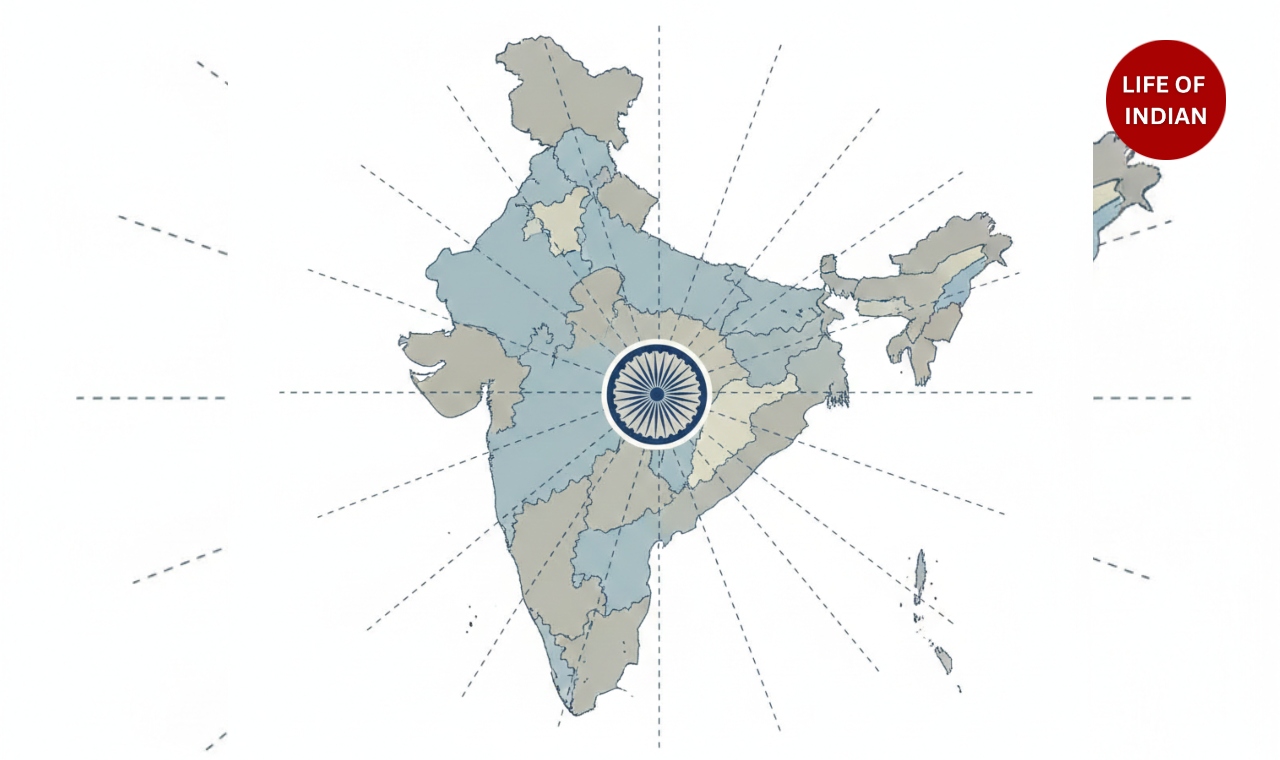
India follows a federal system, where power is divided between the Union and the States. However, during emergencies, the Constitution allows the central government to assume greater control, giving it a unitary character when needed.
This flexible structure ensures both unity and regional autonomy.
8. Parliamentary System of Government
The Indian Constitution adopts a parliamentary form of government, inspired by the British model. In this system:
-
The President is the constitutional head.
-
The Prime Minister and Council of Ministers exercise real executive power.
-
The executive is accountable to the legislature.
This ensures responsible governance and democratic control.
9. Independent Judiciary
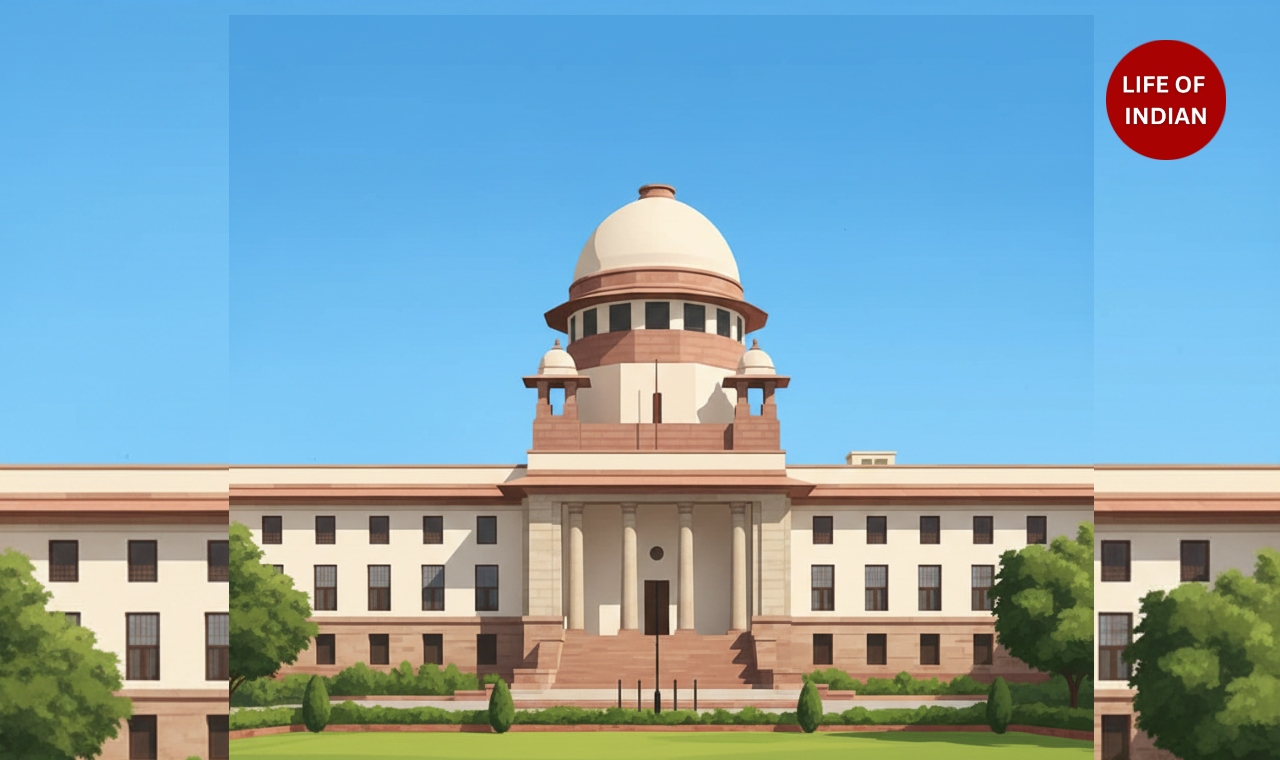
An independent judiciary is essential for protecting constitutional values. The Supreme Court and High Courts act as guardians of the Constitution.
Key powers include:
-
Judicial review
-
Protection of Fundamental Rights
-
Interpretation of constitutional provisions
Judicial independence ensures that no authority is above the Constitution.
10. Single Citizenship
Unlike some federal countries, India provides single citizenship. This means every Indian citizen enjoys the same rights across the country, regardless of the state they belong to.
This feature promotes national unity and integration.
11. Universal Adult Franchise
The Constitution grants the right to vote to every adult citizen above 18 years, irrespective of caste, religion, gender, or economic status.
This makes Indian democracy inclusive and participatory.
12. Amendment Procedure: A Living Constitution
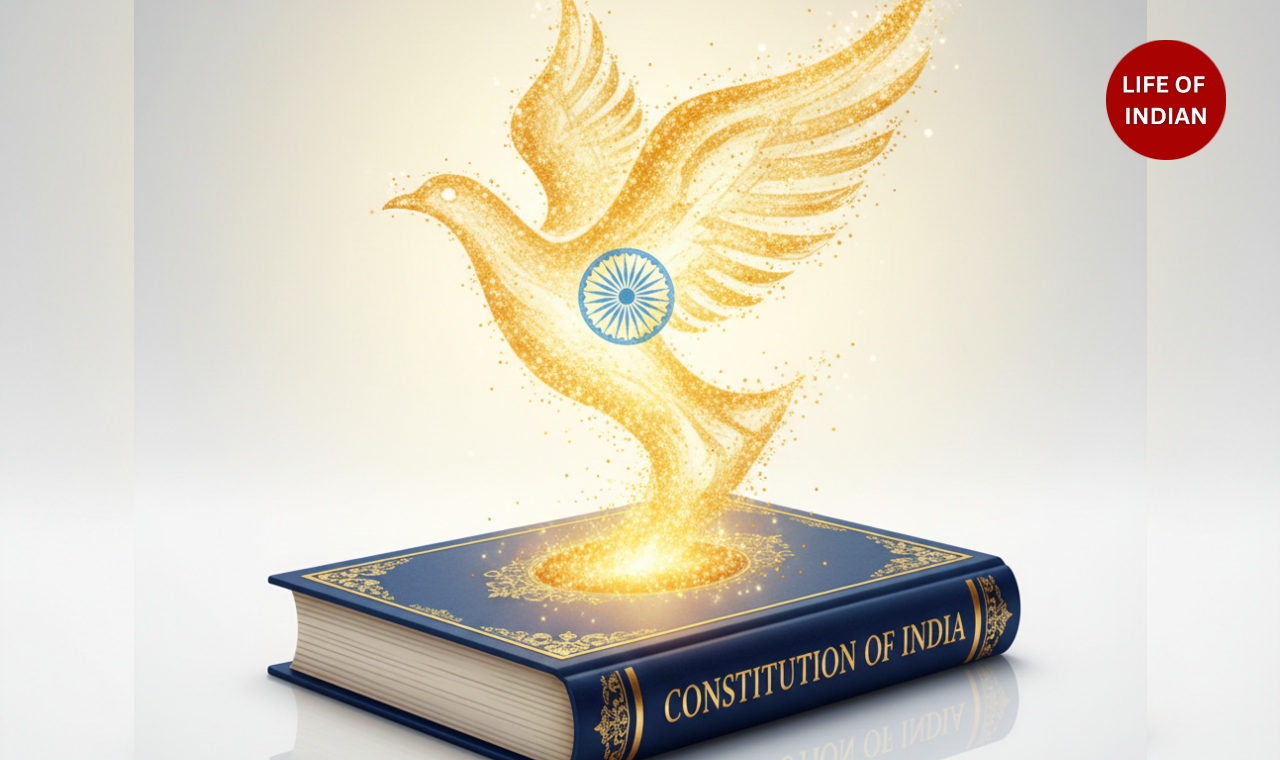
The Indian Constitution is neither rigid nor overly flexible. It can be amended to meet changing needs while preserving its core values.
This balance allows the Constitution to remain relevant over time, earning it the title of a living document.
The Indian Constitution is more than a legal framework—it is a vision for a just, inclusive, and democratic society. Its key features ensure a balance between individual freedom and collective responsibility, unity and diversity, stability and change.
By understanding the Constitution, citizens become more aware, empowered, and responsible participants in India’s democratic journey.