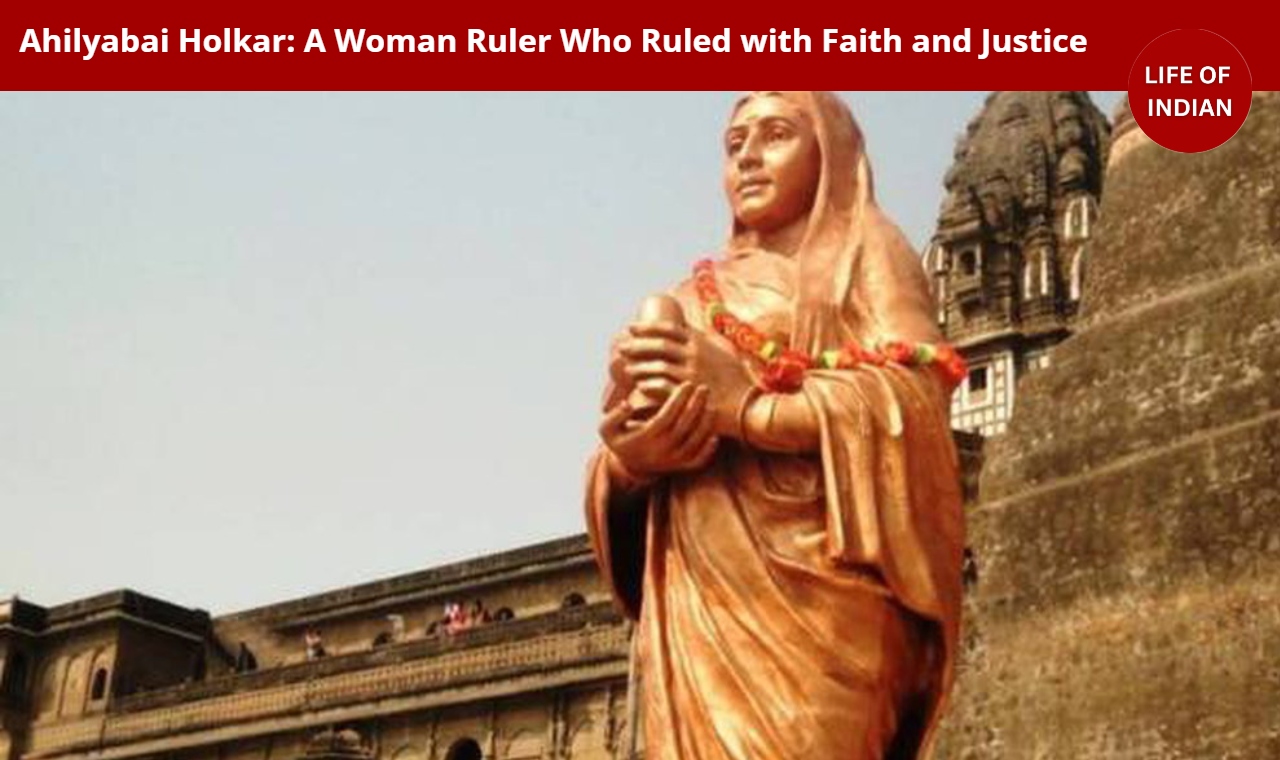
Ahilyabai Holkar: In recent days, Ahilyabai Holkar has once again come into national discussion due to a controversy related to her statue in Varanasi. Social media debates, political statements and public protests have raised one central question — who was Ahilyabai Holkar and why does her legacy still matter so deeply today?
To understand the present controversy, it is essential to understand the life, work and ideals of this extraordinary woman.
Who Was Ahilyabai Holkar?

Ahilyabai Holkar was one of the greatest women rulers in Indian history. She was born on 31 May 1725 in Chaundi village (present-day Maharashtra) and ruled the Malwa kingdom from 1767 to 1795. She belonged to the Holkar dynasty of the Maratha Empire and ruled from Maheshwar, which she developed into a centre of culture, spirituality and administration.
Historians often refer to her as “Punyashlok Ahilyabai,” meaning one whose words and actions are virtuous. Unlike many rulers of her time, her legacy is not associated with wars or expansionism, but with good governance, social welfare, religious tolerance and justice.
Early Life and Rise to Power
Ahilyabai was born into a simple farming family. Her intelligence and discipline caught the attention of Malhar Rao Holkar, the founder of the Holkar dynasty, who arranged her marriage to his son Khanderao Holkar.
Tragedy struck her life early:
-
Her husband died in battle
-
Later, her father-in-law Malhar Rao also passed away
In an era when women rulers were rarely accepted, Ahilyabai faced strong opposition. Yet, her administrative skills, moral authority and public support convinced the Maratha leadership to allow her to ascend the throne.
Administration and Governance: A Model Ruler
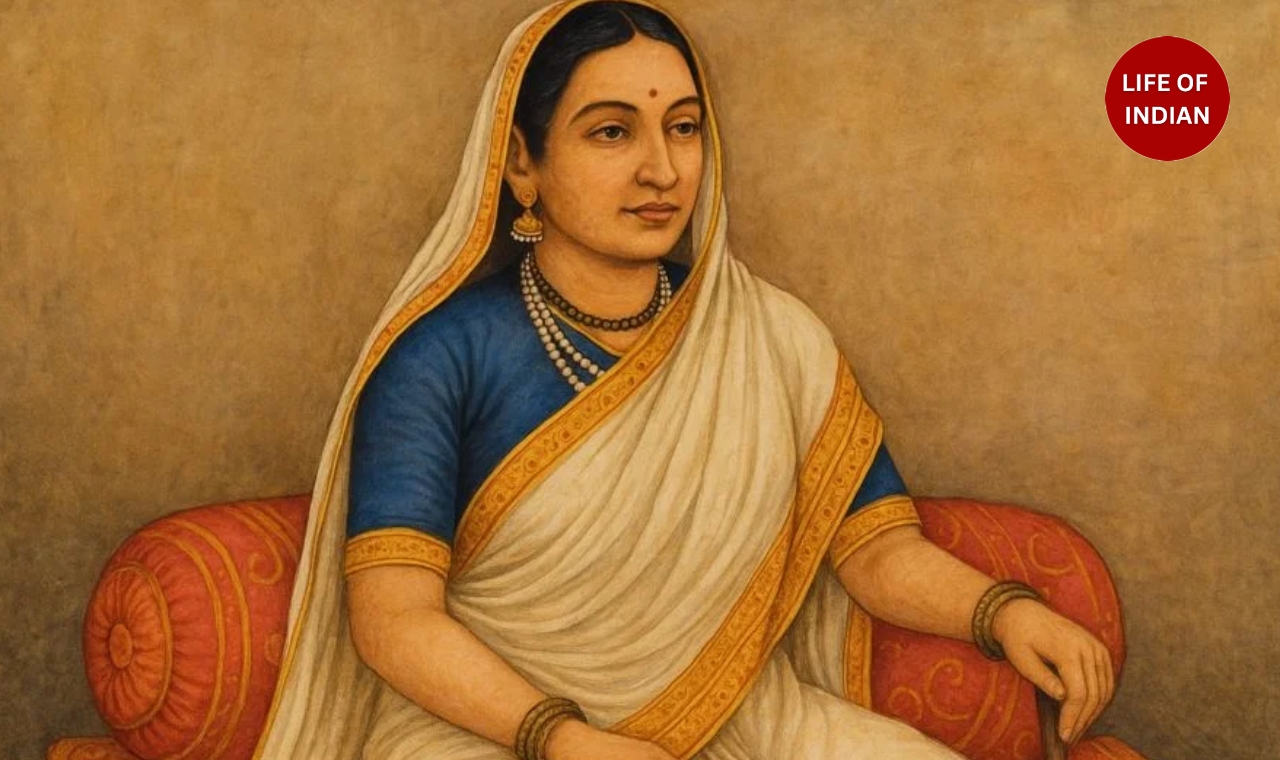
Ahilyabai Holkar is remembered as one of India’s most just and people-centric rulers.
Justice and Administration
-
Her court was open to common people
-
She personally listened to grievances
-
Officials were held accountable
-
Corruption was strictly punished
Her governance philosophy was simple: the ruler is a servant of the people, not their master.
Social Reforms and Welfare Work
Ahilyabai’s reign focused heavily on social upliftment.
Women and Social Equality
-
Encouraged education for women
-
Protected widows and the poor
-
Opposed social exploitation and discrimination
Public Welfare
-
Built roads, wells, ponds and rest houses
-
Established dharamshalas for pilgrims
-
Promoted trade and local industries
The famous Maheshwari textile tradition flourished under her patronage and still survives today.
Rebuilding India’s Sacred Geography
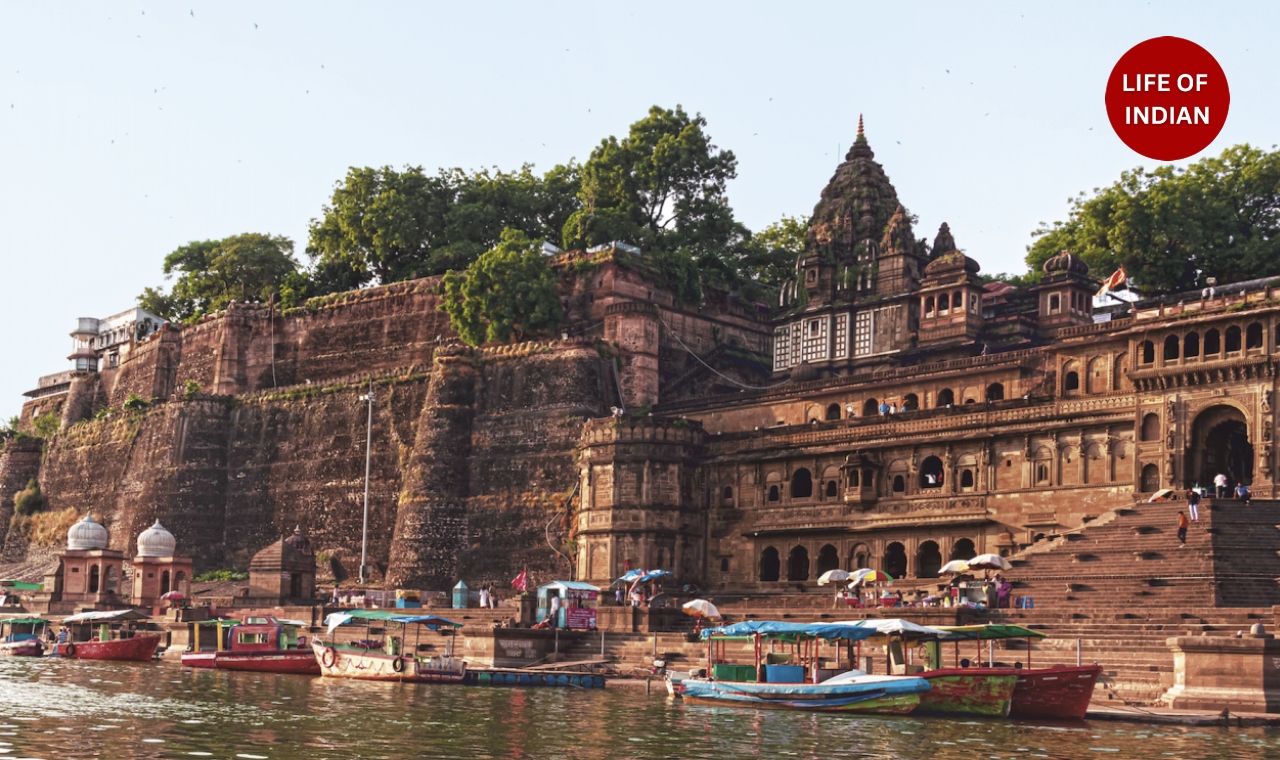
One of Ahilyabai Holkar’s greatest contributions was the reconstruction of Hindu temples and pilgrimage sites across India, many of which had been destroyed or neglected.
Major Religious Works
-
Kashi Vishwanath Temple, Varanasi
-
Somnath Temple, Gujarat
-
Ghats of Varanasi, especially Manikarnika Ghat
-
Temples in Gaya, Ujjain, Rameswaram, Dwarka, Kedarnath and Nashik
She used state resources and personal wealth not for luxury, but for spiritual and cultural restoration.
Importantly, her religious work was inclusive and non-political — she believed faith should unite society, not divide it.
Why Is Ahilyabai Holkar Still Remembered Today?
Ahilyabai Holkar is remembered because:
-
She proved women could rule with wisdom and strength
-
She combined spirituality with governance
-
She ruled without cruelty or ego
-
Her public works still serve millions today
She is often compared with modern ideas of ethical leadership and good governance.
The Varanasi Statue Controversy: What Happened and What Is the Truth?
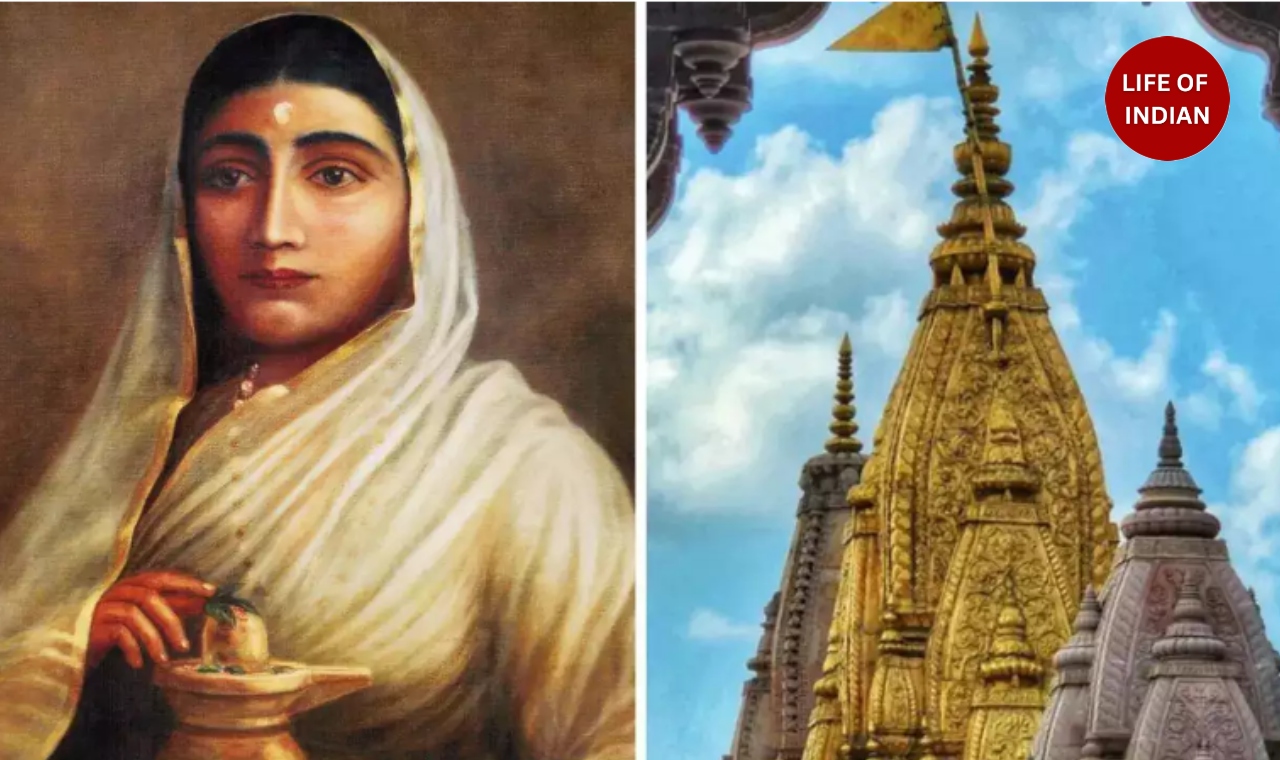
What Is the Issue?
In early 2026, during redevelopment work at Manikarnika Ghat in Varanasi, reports emerged that a statue associated with Ahilyabai Holkar was removed or damaged.
This triggered:
-
Public protests
-
Strong reactions from cultural groups
-
Political debate at state and national levels
Public Concern
People argued that:
-
Ahilyabai Holkar is deeply connected to Varanasi’s heritage
-
She rebuilt Manikarnika Ghat centuries ago
-
Any action affecting her statue hurts cultural and historical sentiments
Administration’s Stand
Authorities clarified that:
-
The statue was not intentionally destroyed
-
It was temporarily removed or relocated as part of redevelopment
-
The statue would be reinstalled respectfully
The Core Truth
There is no official proof of deliberate disrespect. However, the controversy reflects a larger issue — how development projects must balance modern infrastructure with historical sensitivity.
Why This Controversy Matters
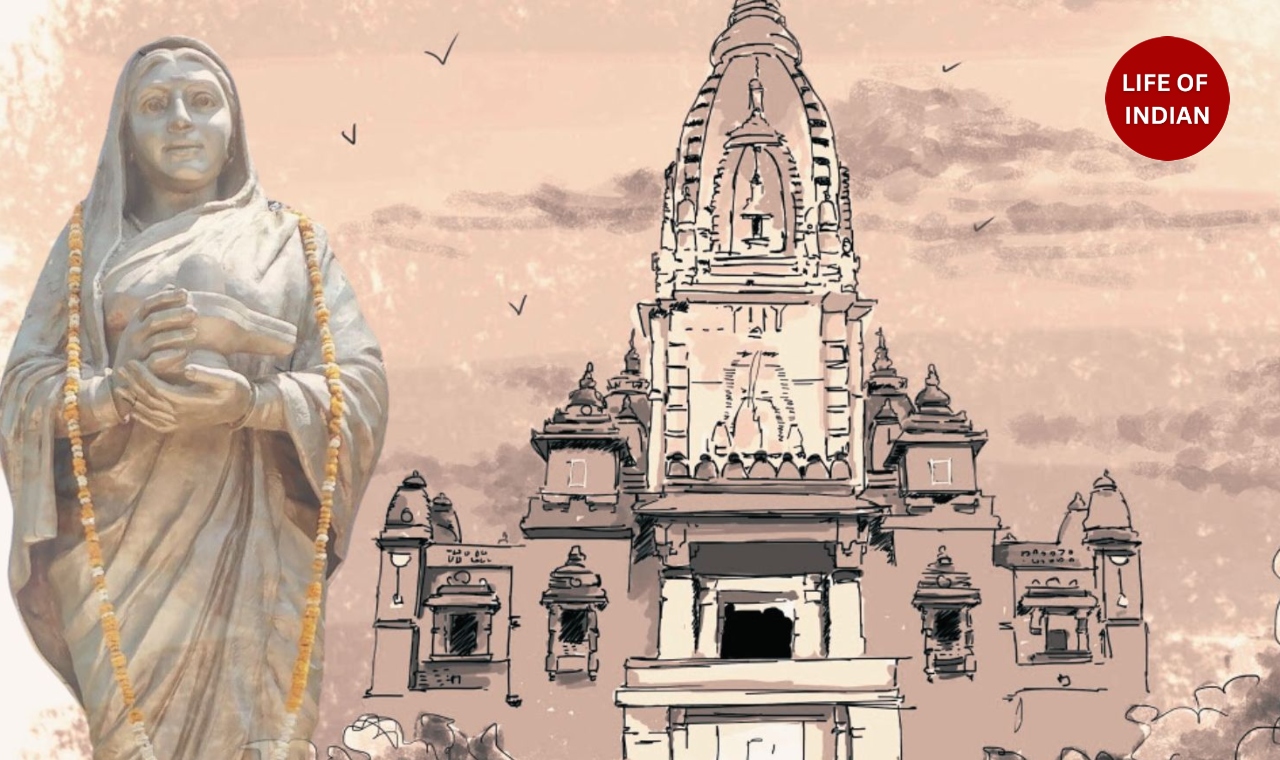
The debate is not just about a statue. It highlights:
-
India’s struggle between development and heritage
-
The emotional connection people have with historical icons
-
The enduring relevance of Ahilyabai Holkar’s values
Her life reminds us that true leadership is rooted in humility, service, and respect for culture.
Ahilyabai Holkar was not merely a queen—she was a visionary administrator, social reformer, and spiritual guardian of India’s cultural soul. At a time when power was associated with force, she ruled with compassion. When rulers sought personal glory, she invested in public welfare.
The fact that her name still sparks national debate centuries later proves one thing clearly:
Ahilyabai Holkar did not rule history—she became history.