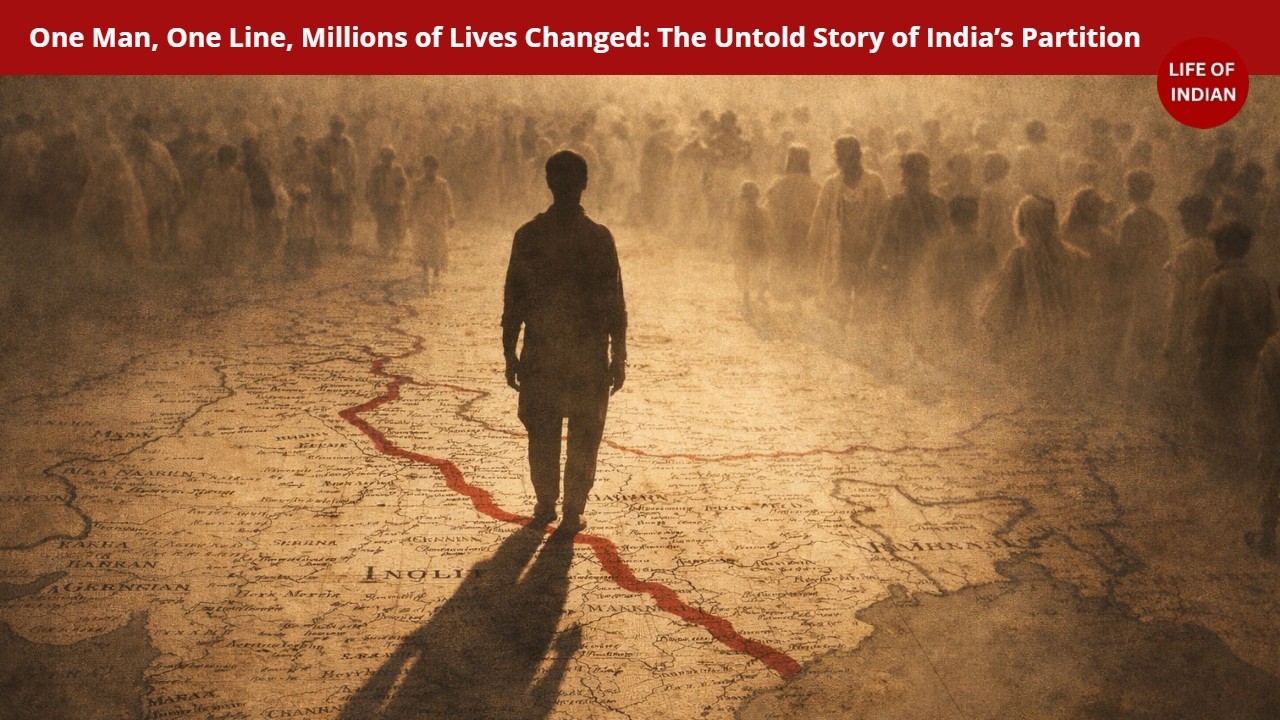
The Untold Story of India’s Partition: The year 1947 remains one of the most decisive—and painful—chapters in Indian history. India finally achieved independence after centuries of British rule, but that freedom came with a devastating cost: Partition. Along with independence came bloodshed, displacement, and a wound that still shapes South Asia today. At the center of this tragedy stands a little-known name that later became infamous—Sir Cyril Radcliffe.
Radcliffe was not an Indian. He had never lived in India, never studied its people, culture, languages, or social complexities. Yet, in one of history’s most astonishing decisions, he was given the responsibility of drawing the boundary that would divide India and Pakistan. That single act changed millions of lives forever.
Who Was Sir Cyril Radcliffe?
Sir Cyril John Radcliffe was a British lawyer born on 30 March 1899 in England. He was a respected barrister and judge in Britain, known for his legal skills—but not for any experience in colonial administration or international boundary making. Most importantly, Radcliffe had never visited India before 1947.
He had no understanding of India’s religious diversity, its centuries-old communal ties, or the fragile coexistence between Hindus, Muslims, and Sikhs. Despite this, the British government selected him for the most sensitive task imaginable: dividing British India into two nations.
Why Was Radcliffe Chosen?
As Britain prepared to leave India, political pressure mounted for the creation of a separate Muslim nation, Pakistan. The British wanted to exit quickly and with minimal responsibility. They believed appointing a neutral British outsider would prevent accusations of bias from either India or the Muslim League.
In reality, Radcliffe was chosen not because he was ideal—but because he was convenient. Britain wanted a fast solution, not a thoughtful one. The consequences of that haste would soon become catastrophic.
An Impossible Deadline
Perhaps the most shocking fact of the entire process is the time Radcliffe was given. He had just five to six weeks to draw borders across Punjab and Bengal—regions with millions of people, mixed populations, and deeply intertwined communities.
There were no modern surveys, no accurate population data, and no time to visit the areas properly. Radcliffe relied on outdated maps, partial census figures, and political pressure from all sides. Even he later admitted the task was nearly impossible.
What Did Radcliffe Do to India?
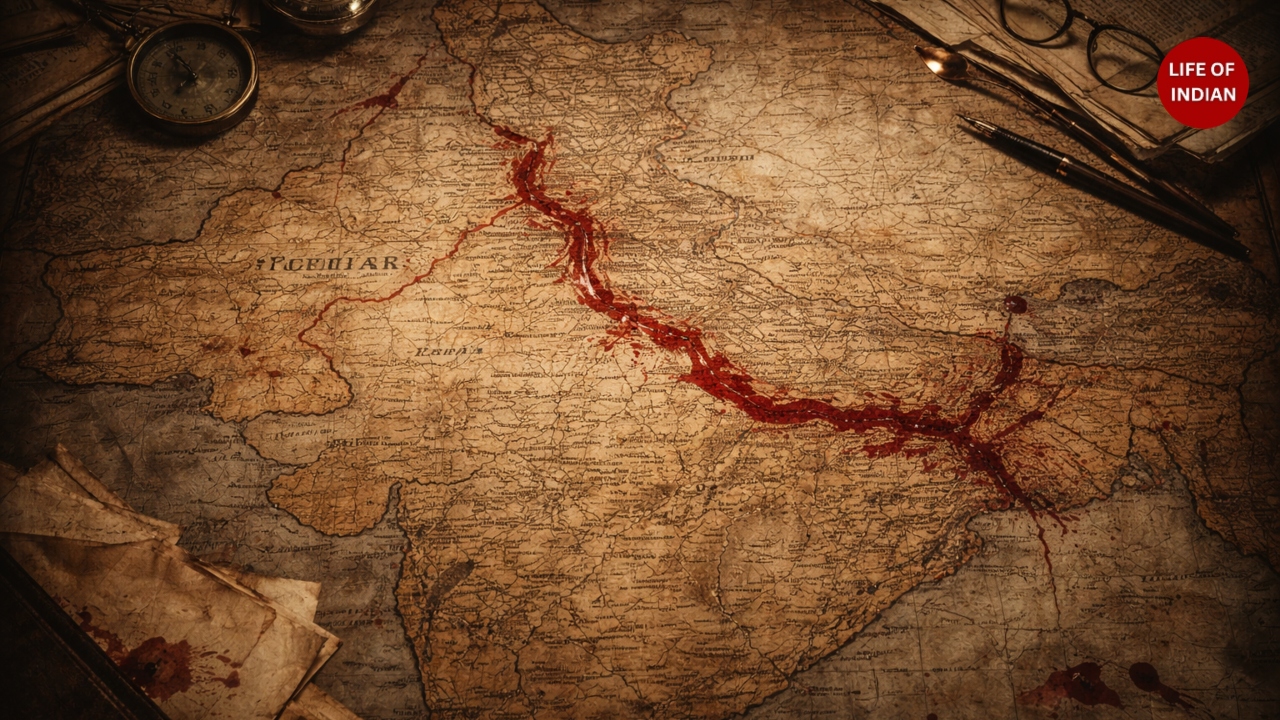
Radcliffe drew what is now known as the Radcliffe Line, the boundary separating India and Pakistan. This line was created largely on religious demographics, without fully considering economic ties, irrigation systems, transport routes, or human realities.
As a result, many Hindu- and Sikh-majority areas were assigned to Pakistan, while several Muslim-majority regions ended up in India. Entire villages were split in half. Fields belonged to one country while the farmer lived in another. Homes, temples, mosques, and gurdwaras suddenly became “foreign property.”
Punjab suffered the most. Bengal, too, was torn apart. People went to sleep in India and woke up in Pakistan—or the other way around—without ever moving.
The Human Tragedy of Partition

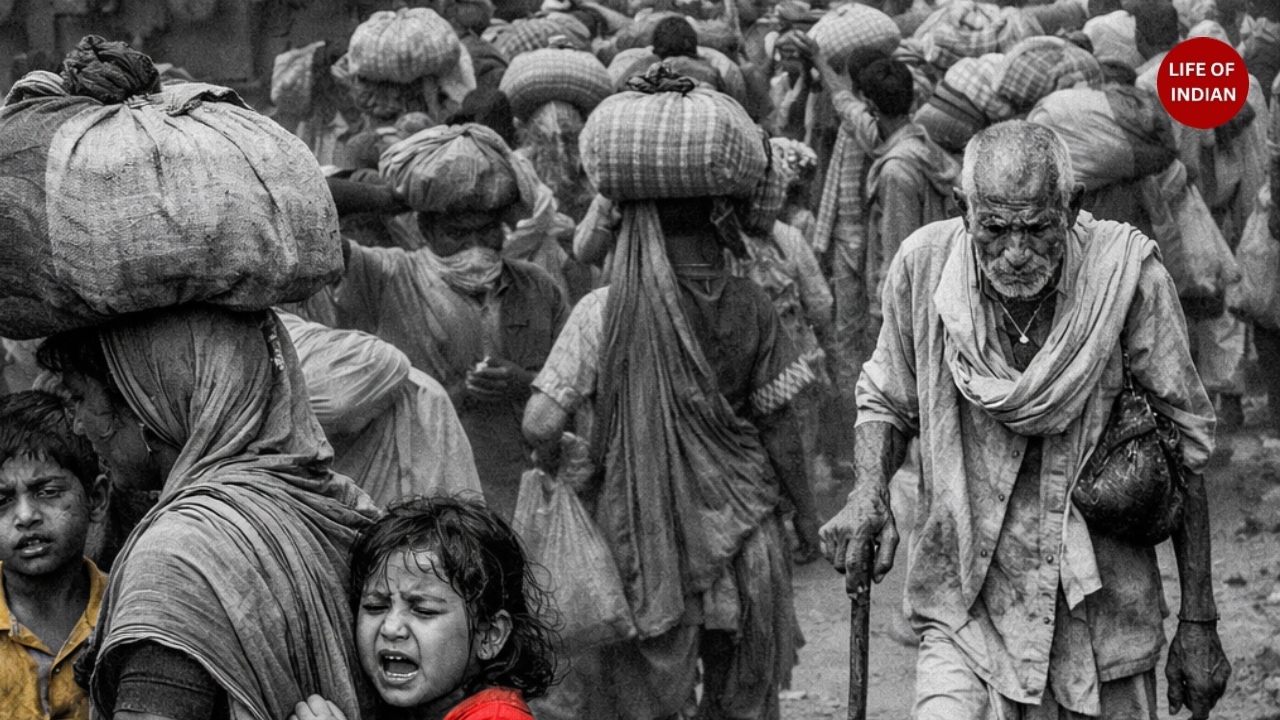
The Radcliffe Line was announced after 15 August 1947, when celebrations of independence were already underway. Millions had no idea which country they belonged to.
What followed was one of the largest and most violent migrations in human history.
Around 15 million people were forced to leave their homes.
An estimated 1 to 1.5 million people were killed in communal violence.
Thousands of women were abducted, assaulted, or lost forever.
Families were destroyed, and generations were traumatized.
This was not just a political division—it was a humanitarian disaster.
Did Radcliffe Feel Guilty?
Radcliffe was deeply disturbed by the outcome. Before leaving India, he refused his entire fee, stating he did not wish to accept payment for such a tragedy. He reportedly burned all his papers and maps, and for the rest of his life, he avoided public discussion of Partition.
Many historians believe he carried lifelong guilt for the suffering his decision caused, even though the true responsibility lay with the British government’s reckless haste.
How History Remembers Radcliffe
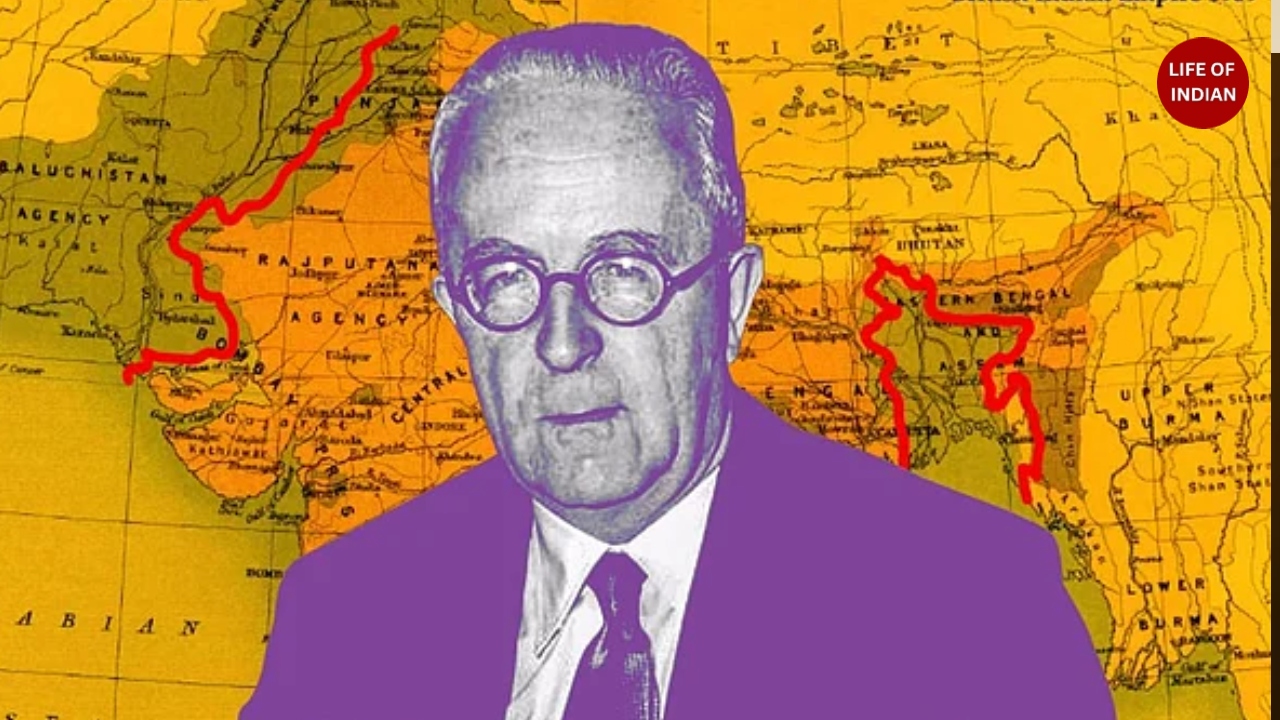
Today, Sir Cyril Radcliffe is remembered less as an individual and more as a symbol of colonial negligence. He became the face of a system that valued speed over humanity and withdrawal over responsibility.
The British left India quickly, but the scars they left behind remain. The Radcliffe Line still defines borders, politics, and conflicts in South Asia to this day.
Sir Cyril Radcliffe drew a line on a map—but that line turned into rivers of blood, tears, and pain. He did not intend to destroy lives, yet his work helped trigger one of history’s greatest tragedies.
India gained freedom, but paid for it with unimaginable suffering. The story of Radcliffe is a powerful reminder that a nation’s fate cannot be decided in haste, by strangers, or without understanding the people whose lives are at stake.
History must remember—not to blame alone, but to never repeat such a mistake again.