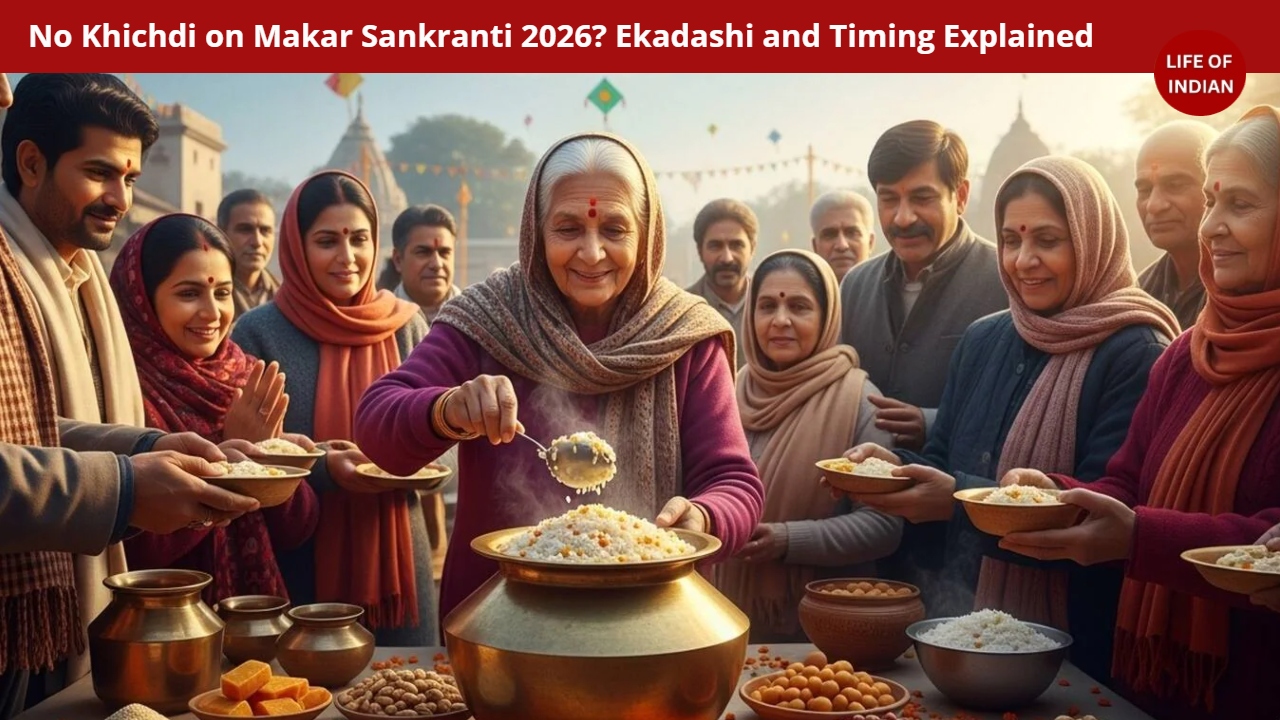
Makar Sankranti 2026: Makar Sankranti is one of the most important Hindu festivals, celebrated across India with devotion and enthusiasm. The festival marks the Sun’s transition into Capricorn (Makara Rashi) and is considered the beginning of an auspicious phase. However, Makar Sankranti 2026 is being discussed differently this year, as pandits and religious scholars believe that preparing and donating khichdi on this day may not be appropriate.
Let us understand all the reasons behind this belief.
Religious Significance of Khichdi on Makar Sankranti
Preparing and donating khichdi on Makar Sankranti is a long-followed tradition, especially in Uttar Pradesh, Bihar, and many parts of North India. Khichdi, made from rice and lentils, is considered sacred on this day because it symbolizes:
-
Purity and simplicity
-
Gratitude for the harvest
-
Charity and spiritual merit
-
Seasonal nourishment during winter
Due to this tradition, Makar Sankranti is also known as Khichdi Sankranti in several regions.
Why Khichdi May Not Be Prepared on Makar Sankranti 2026
This year, pandits are advising restraint due to multiple religious and astrological reasons.
Inauspicious Timing of Sun Transit
According to Hindu beliefs, auspicious rituals such as puja, daan (charity), and preparation of sacred food should ideally be performed during the daytime (Udaya Tithi).
In 2026, the Sun’s transition into Capricorn is believed to occur late at night or during an inauspicious period. When Sankranti falls during such timings, many scholars recommend avoiding or postponing traditional rituals.
Ekadashi Falls on January 14
One of the most important reasons is that Ekadashi Tithi falls on January 14, 2026.
In Hindu tradition, consumption of grains is strictly prohibited on Ekadashi. Devotees usually:
-
Observe a strict or fruit-based fast
-
Avoid rice, wheat, pulses, and lentils
-
Focus on worship of Lord Vishnu
Since khichdi is primarily prepared using rice and lentils, preparing, consuming, or donating it on Ekadashi is considered religiously inappropriate.
Priority of Ekadashi Rules Over Sankranti Rituals
Pandits explain that when Sankranti and Ekadashi occur on the same day, the rules of Ekadashi take precedence. Hence, devotees are advised to strictly follow Ekadashi discipline, which includes avoiding grain-based food like khichdi.
What Do Pandits Recommend Instead?
In place of khichdi, religious scholars suggest the following practices:
- Worship the Sun God and offer Arghya
- Donate sesame seeds, jaggery, fruits, or warm clothes
- Perform khichdi daan on the next auspicious day
- Observe Ekadashi vrat with devotion and discipline
It is believed that intention and devotion are more important than rituals alone.
Regional Variations in Traditions
It is important to note that Makar Sankranti traditions vary from region to region:
-
Uttar Pradesh: Khichdi holds special importance
-
Bihar: Til, jaggery, and dahi-chura are preferred
-
Tamil Nadu: Celebrated as Pongal
-
Gujarat: Known for kite flying festivals
Therefore, while some regions may still prepare khichdi, many communities are likely to follow pandits’ advice this year.
Makar Sankranti 2026 continues to be a sacred festival symbolizing positivity, discipline, and charity. However, due to the timing of the Sun’s transit and the occurrence of Ekadashi on January 14, pandits are advising against preparing khichdi this year.
Devotees are encouraged to follow local traditions and religious guidance, remembering that the true spirit of Makar Sankranti lies in charity, devotion, and goodwill.