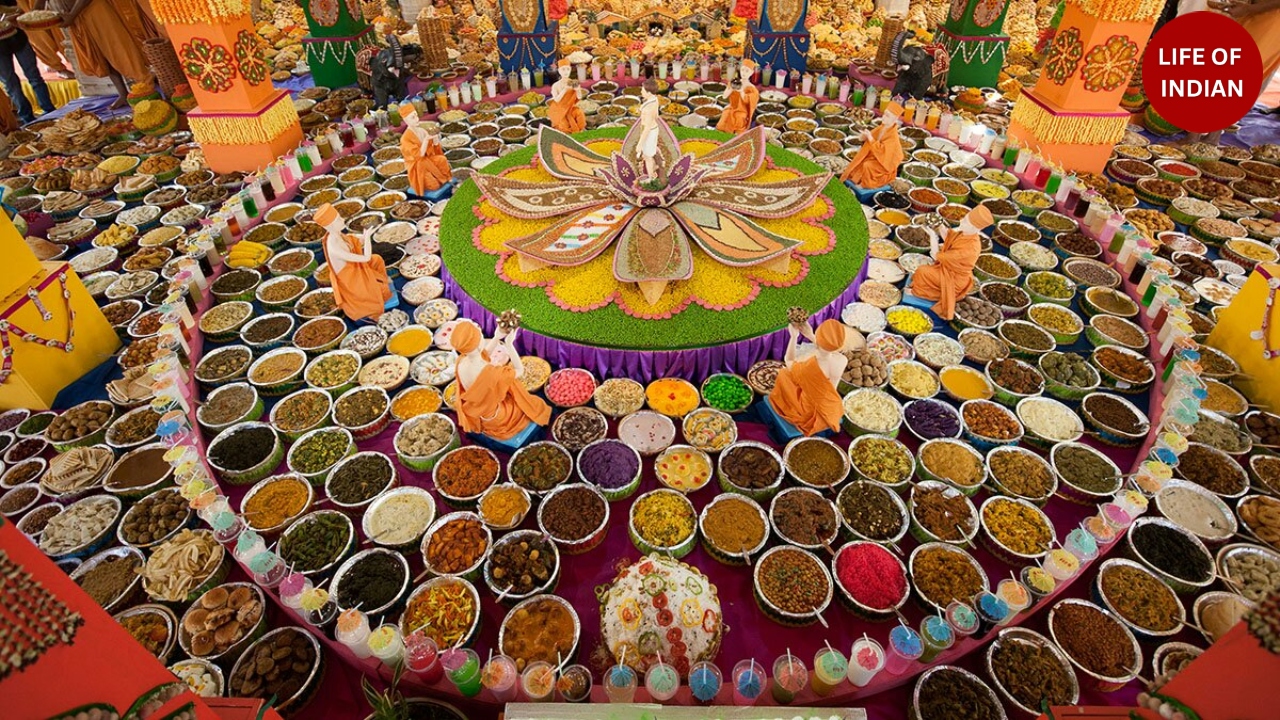
Annakut 2025: The festival of Diwali lasts for six grand days — beginning with Dhanteras and concluding with Bhai Dooj. Each day carries its own spiritual and cultural significance. After Dhanteras comes Narak Chaturdashi, followed by Diwali, Govardhan Puja, and finally Bhai Dooj. Among these, Govardhan Puja holds a special place as it marks the day when Lord Krishna lifted the Govardhan Hill (Giriraj Mountain) to protect the people of Vrindavan from Lord Indra’s torrential rains.
What is Annakut?
The word “Annakut” literally means “a mountain of food.” On Govardhan Puja, devotees prepare and offer a large variety of food items to Lord Krishna as a token of gratitude and devotion. Traditionally, an idol of Giriraj Maharaj is crafted from cow dung, and the Annakut Bhog is presented before the deity. The dish is a beautiful mix of pulses, vegetables, grains, and aromatic spices — representing abundance and nourishment.
Significance of Annakut
Annakut is not just a ritual — it is an expression of devotion, thankfulness, and community bonding. The offering of freshly prepared food to Lord Krishna symbolizes gratitude for His divine protection and blessings. It reflects the human connection with nature, food, and faith, reminding devotees of the balance between prosperity and humility.
The celebration also honors Govardhan Hill, which Lord Krishna lifted on His little finger to shield the villagers from the wrath of Indra. Through this act, He taught the importance of worshipping nature over ritualistic offerings to deities of power.
Families gather to offer prayers, sing bhajans, share the Bhog, and perform the Govardhan Puja, creating a spirit of unity and spiritual harmony.
How to Make Annakut at Home: Traditional Recipe
Ingredients:
-
Potatoes, onions, tomatoes, carrots, cauliflower, bell peppers, eggplant, okra, pumpkin, gourd, beans (finely chopped)
-
Half bowl of mung beans and rice
-
Cumin seeds, asafoetida, garam masala, bay leaves
-
Ginger-garlic paste
-
Salt, coriander powder, red chilli powder, black salt, mango powder, turmeric
-
A small quantity of millet and wheat (optional)
-
Cooking oil and water
Step-by-Step Method:
Step 1:
Finely chop all the vegetables and keep them aside.
Step 2:
Heat oil in a large pan. Add cumin seeds, asafoetida, and freshly ground garam masala. Add all chopped vegetables along with crushed ginger-garlic paste and bay leaves. Stir well.
Step 3:
Add half a bowl of mung beans and rice to the mixture. Pour in 1–2 cups of water, cover the cooker, and let it cook for 2–3 whistles.
Step 4:
After cooking, mash the vegetables and rice with a ladle. Prepare the masala by mixing salt, coriander powder, red chilli, black salt, mango powder, garam masala, and turmeric with a little water to make a slurry.
Step 5:
Add this masala mixture into the cooked vegetables and stir well. Let it simmer until the spices blend perfectly and a rich aroma fills your kitchen.
Step 6:
Your Annakut curry is ready! Offer it as Prasad to Lord Govardhan during the puja and later enjoy it with roti, rice, or puri.
The Story Behind Annakut Feast
According to Hindustan Times, Shailendra Goswami, a 16th-generation priest at Shri Banke Bihari Temple, Vrindavan, explained the origin of the Annakut tradition. The Shrimad Bhagwat Purana narrates that when young Krishna — only eight years old — lifted the Govardhan Parvat to protect the villagers from Indra’s wrath, the Brijwasis expressed their gratitude by preparing a grand feast. They offered 56 types of food (Chhappan Bhog) for seven days — thus beginning the sacred tradition of Annakut and Govardhan Puja.
Annakut 2025 is a celebration of gratitude, devotion, and abundance. It reminds us that divine blessings are rooted in humility and collective harmony. Preparing and sharing Annakut Bhog is a way to connect with tradition, express faith, and celebrate the essence of Govardhan Puja — the eternal bond between nature, humanity, and God.