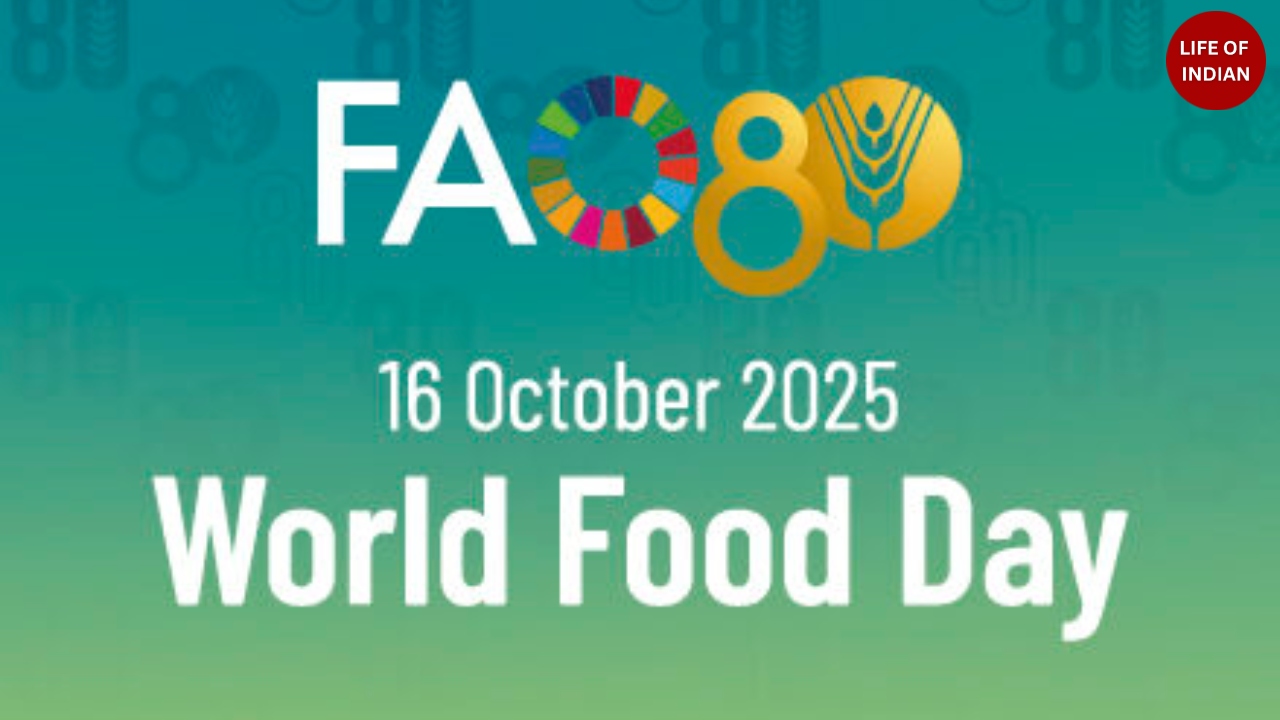
World Food Day 2025: This year, World Food Day holds special significance as it marks 80 years since the founding of the Food and Agriculture Organization (FAO) of the United Nations — an organization born from the vision to secure humanity’s freedom from hunger and want.
From its inception in 1945, FAO has led global efforts to eradicate hunger, improve nutrition, and promote sustainable agriculture. But even today, as the world produces more than enough food to feed everyone, over 8.2% of people still face chronic undernourishment.
A Journey from Scarcity to Abundance
When FAO conducted its first World Food Survey in 1946, nearly two-thirds of the world’s population lived in areas with inadequate food supply. Eight decades later, humanity produces triple the food needed — yet inequality, conflict, and climate change continue to keep millions hungry.
The words from that early survey still resonate today:
“The choice is between going forward and going backward.”
Global Achievements that Shaped the Future
Over the years, FAO has been at the heart of several historic milestones:
-
Elimination of the deadly Rinderpest virus, saving millions of livestock.
-
Codex Alimentarius – establishing international food safety standards.
-
Tripling global rice yields since the 1940s through research and innovation.
-
International treaties on fisheries, genetic resources, and sustainable practices.
-
Early-warning systems for pests, diseases, and food crises.
-
The Agricultural Market Information System (AMIS) – ensuring stable trade and food prices.
-
Global nutrition guidelines to combat malnutrition and obesity trends.
When desert locust outbreaks began in Africa during the COVID-19 pandemic, FAO mobilized $231 million in response — saving an estimated $1.77 billion in losses and protecting food supplies for over 40 million people across 10 countries.
Strength Through Cooperation
Such achievements are not just institutional victories — they represent the power of global unity. Countries, rich or poor, north or south, have proven that when knowledge, resources, and willpower are shared, humanity wins.
But the world today faces new threats — climate shocks, pests, economic downturns, and conflicts that cut across borders. The highly pathogenic avian influenza (bird flu), Fall armyworm, and locust invasions show that no country can act alone.
Building Resilience for a Sustainable Future
Over one billion people work in agrifood systems globally. Their resilience — farmers, fishers, herders, and food workers — is central to ending hunger.
FAO’s initiatives are helping them thrive:
-
Hand-in-Hand Initiative: Identifies investment opportunities in the poorest, most food-insecure regions.
-
One Country One Priority Product: Promotes unique agricultural strengths of each nation.
-
South-South Cooperation: Strengthens partnerships among developing countries.
-
Digital Villages Initiative: Brings e-commerce and technology to rural farmers.
-
G20 Global Alliance Against Hunger: Mobilizes investment for ending global hunger.
The “Four Betters” Vision
FAO’s mission for a sustainable future is captured in its “Four Betters” framework:
-
Better Production – More yield with fewer resources.
-
Better Nutrition – Quality and diversity in food.
-
Better Environment – Protecting ecosystems and biodiversity.
-
Better Life – Empowering rural communities with dignity and opportunity.
Together, these principles ensure no one is left behind.
A Call to Move Forward
Eighty years after FAO’s founding, hunger still exists, but it is not inevitable. The tools, technologies, and collective will to end it already exist. The question now is — do we have the courage to move forward?
“With shared purpose, we can — and must — finish the job of ending hunger. For a food-secure future for all.”
– Dr. QU Dongyu, Director-General, FAO of the United Nations