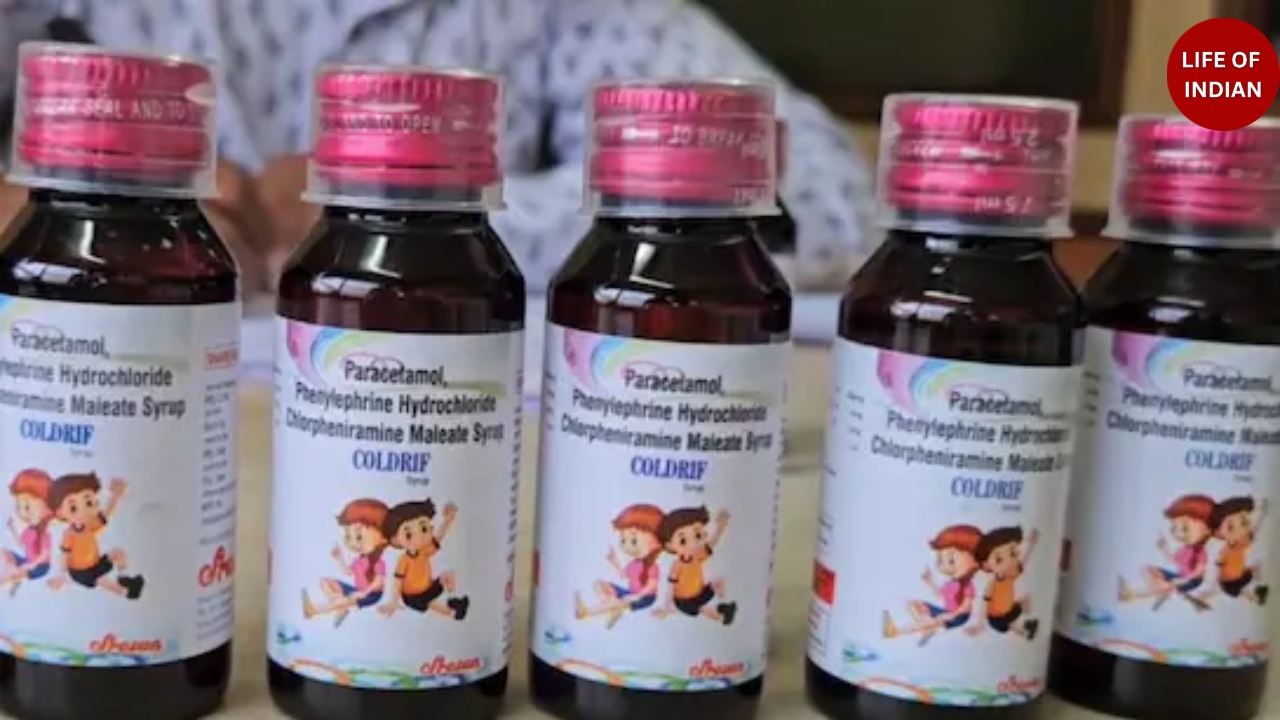
Toxic Cough Syrup Tragedy: A major health crisis has emerged in India’s Madhya Pradesh and Rajasthan, where more than 13 children have tragically died after allegedly consuming a cough syrup named Coldrif, manufactured by Sresan Pharmaceuticals. Initial reports indicate that the children suffered from severe kidney infections and failure shortly after taking the medicine.
Authorities have now suspended the sale and distribution of the syrup across several states, and a full-scale investigation is underway to determine how such a toxic substance made its way into children’s medicine.
What Went Wrong: The Deadly Ingredient in Coldrif
Lab tests revealed that Coldrif syrup contained a dangerously high level of Diethylene Glycol (DEG) — a toxic industrial chemical that can cause acute kidney failure, nervous system damage, and death when ingested.
Shockingly, the sample of Coldrif tested positive for 48.6% Diethylene Glycol, an extremely high concentration for any medicinal product.
Diethylene Glycol (DEG) is not meant for human consumption. It is commonly used in:
-
Automobile brake fluids
-
Engine coolants
-
Industrial paints
-
Plastics and lubricants
When accidentally or intentionally mixed with medicinal syrups, DEG acts as a slow poison, attacking the kidneys and liver, particularly in young children.
Another Syrup Under Suspicion: Nextro-DS
Along with Coldrif, another cough syrup named Nextro-DS has also come under investigation for possible contamination. Authorities suspect similar chemical misuse or production negligence. Regulatory agencies are now testing all batches from the manufacturer and related suppliers to ensure that no other contaminated medicines reach the public.
WHO Issues Global Warning on DEG
The World Health Organization (WHO) has issued a serious global alert regarding Diethylene Glycol contamination in medicinal syrups.
According to WHO, since 2022, the use of DEG and Ethylene Glycol (EG) in pharmaceutical syrups has led to multiple child deaths in countries including India, Gambia, Uzbekistan, and Cameroon.
WHO has strongly advised all nations to ban the use of these industrial chemicals in drug formulations and to strengthen quality control checks on raw materials used in medicine manufacturing.
“Any medicinal syrup containing Diethylene Glycol is highly toxic and life-threatening, especially for children,” said the WHO statement.
Government Action: Suspension, Bans, and Investigations
After the initial reports surfaced, several state governments — including Tamil Nadu, Madhya Pradesh, and Kerala — took swift action to immediately ban the sale and distribution of Coldrif syrup.
The Central Drugs Standard Control Organization (CDSCO), India’s top drug regulatory body, has initiated a nationwide investigation to trace the source of the contaminated batches and determine whether manufacturing standards were violated.
The Rajasthan government has also suspended the State Drug Controller Rajaram Sharma for allegedly influencing the approval process and compromising drug safety norms.
Chief Ministers of affected states have ordered expert committees to probe the issue and ensure strict accountability.
How Are Medicines Approved in India?
In India, the responsibility of approving and monitoring drugs lies with the Central Drugs Standard Control Organization (CDSCO), under the Ministry of Health and Family Welfare.
Before a drug is approved, it must undergo:
-
Pre-clinical testing for toxicity.
-
Clinical trials on human subjects.
-
Manufacturing inspections for quality assurance.
However, experts argue that lax oversight, corruption, and poor quality control in smaller pharmaceutical companies often lead to dangerous errors — as seen in this case.
Experts Raise Alarm Over Repeated Incidents
Public health experts have expressed deep concern over the recurring DEG-related poisonings in India. Similar incidents occurred in 1998, 2022, and 2023, each time involving locally manufactured syrups sold without sufficient quality checks.
Dr. Anita Kurup, a toxicologist based in New Delhi, said:
“The repeated occurrence of Diethylene Glycol poisoning points to systemic failures in the regulatory framework. We need mandatory testing of all liquid medications before market release.”
Lessons from the Tragedy
This heartbreaking incident underscores the urgent need for:
-
Stricter pharmaceutical regulations and enforcement.
-
Regular laboratory testing of all medicines, especially pediatric syrups.
-
Transparency in manufacturing and approval processes.
-
Public awareness campaigns to ensure safe medication practices.
Until stronger reforms are implemented, incidents like these will continue to endanger innocent lives.
The Coldrif syrup tragedy serves as a grim reminder that negligence in the pharmaceutical industry can have fatal consequences. While government actions are underway, the loss of over a dozen young lives demands more than accountability — it demands systemic reform.
Ensuring the safety of medicines, particularly those made for children, should not be a matter of chance but of absolute responsibility.