150 Years of Vande Mataram: As India celebrates 150 years of Vande Mataram, it’s worth revisiting the remarkable journey of this song — a song that began as a poem, transformed into a revolutionary cry, and finally became the nation’s Rashtriya Geet (National Song).
The Birth of a Patriotic Hymn
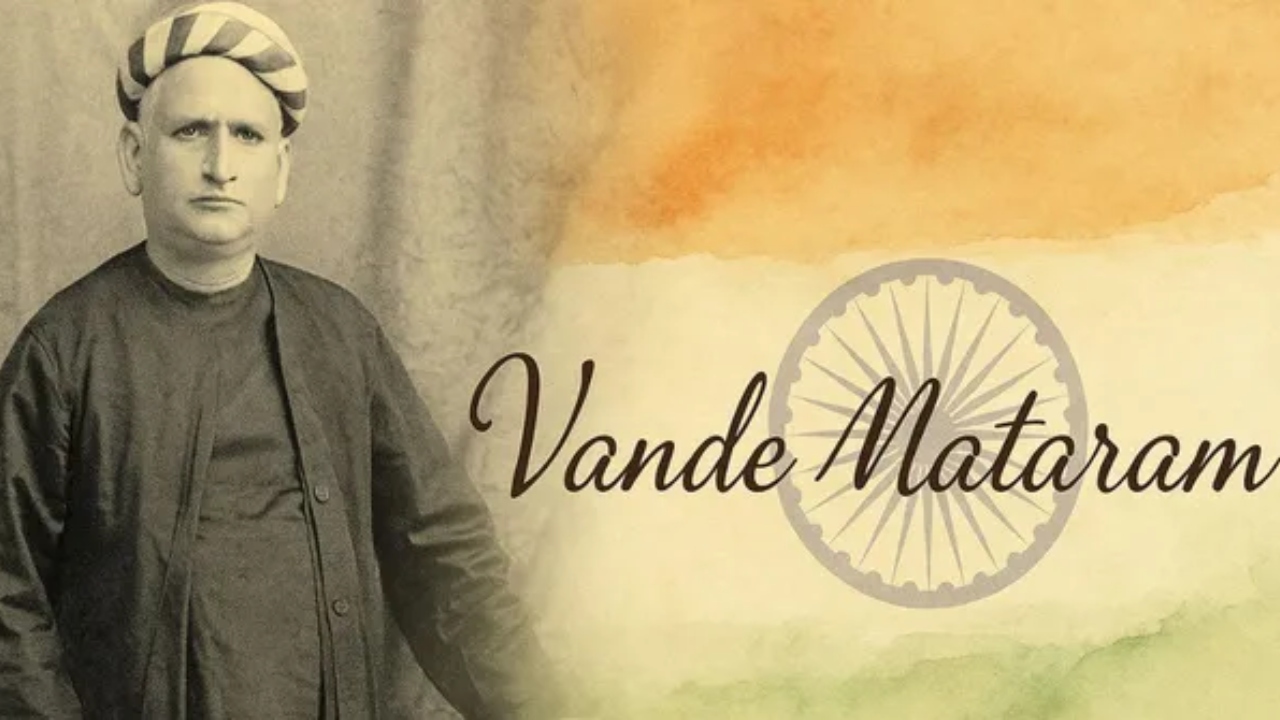
The story of Vande Mataram begins in 1875, when Bankim Chandra Chattopadhyay, one of India’s greatest literary figures, wrote it in Sanskrit and Bengali. It was later published in his celebrated novel ‘Anandamath’ (1882).
At that time, India was still under British rule, and patriotic expression was heavily censored. Yet, Bankim Chandra’s verses — which praised the motherland as a divine figure — awakened the dormant sense of nationalism among Indians.
The words “Vande Mataram”, meaning “I bow to thee, Mother”, became a spiritual salute to India herself — not as a political entity, but as a living, breathing mother.
The Power of the Lyrics
The poem begins with enchanting descriptions of India’s beauty: her fertile fields, her flowing rivers, and her serene landscapes. Gradually, it transforms into a powerful invocation of the goddess — symbolizing strength, protection, and freedom.
The first two stanzas, written in simple yet lyrical Sanskrit, evoke both devotion and patriotic passion:
Vande Mataram!
Sujalam, suphalam, malayaja shitalam,
Shasyashyamalam, Mataram!
These lines glorify the land as a nurturing mother — full of abundance, cool winds, and green crops — a mother worth fighting for.
When Vande Mataram Became a War Cry
By the late 19th and early 20th centuries, Vande Mataram had become more than poetry. It turned into a rallying cry for India’s freedom movement.
During the Bengal Partition of 1905, the slogan “Vande Mataram” echoed across the streets, inspiring protests, rallies, and songs of defiance. It united people beyond religion and region, symbolizing the collective voice of Indians demanding independence.
Leaders like Bipin Chandra Pal, Lala Lajpat Rai, Aurobindo Ghosh, and Bal Gangadhar Tilak used the song as a motivational tool. It was sung at Congress sessions and revolutionary gatherings alike, often under the threat of British repression.
Even Rabindranath Tagore, India’s Nobel laureate, sang Vande Mataram at the 1896 Indian National Congress session, lending it an artistic and emotional depth that touched millions.
The Music and the Magic
The melody we associate with Vande Mataram today was composed by Rabindranath Tagore, though several versions emerged over time. The song’s fusion of devotional calm and revolutionary zeal gave it an unmatched emotional power.
Musicians and freedom fighters often adapted the tune to suit different movements — from the peaceful protests of Gandhian followers to the fiery marches of revolutionaries.
From Song to Symbol: Recognition and Debate
After independence in 1947, the newly formed Constituent Assembly of India had to decide on a national anthem. While Vande Mataram was deeply cherished, its later verses — invoking Hindu goddesses — created concerns about religious inclusivity.
As a result, a balanced decision was made:
-
Rabindranath Tagore’s “Jana Gana Mana” was adopted as the National Anthem,
-
and Bankim Chandra Chattopadhyay’s “Vande Mataram” was declared the National Song.
Only the first two stanzas — the ones describing the beauty of the motherland — were officially recognized.
This decision preserved the emotional and historical importance of Vande Mataram while ensuring harmony in a diverse nation.
Enduring Legacy: 150 Years Later
Even after a century and a half, the words “Vande Mataram” continue to stir deep emotion in every Indian heart. The song has been performed by countless artists, used in films, quoted in speeches, and sung during national ceremonies.
In schools, public events, and Independence Day celebrations, its echoes remind us of the unity, sacrifice, and spirit of India’s freedom struggle.
Today, as India celebrates 150 years of this timeless song, Vande Mataram stands not just as a piece of history — but as a living emotion that unites 1.4 billion people across languages, faiths, and generations.
Why Vande Mataram Still Matters
In an age of modern politics and globalization, Vande Mataram reminds us of an India that fought with courage, imagination, and faith. It tells us that patriotism is not just about territory — it’s about respect, gratitude, and devotion to the motherland.
The song continues to symbolize the soul of India — its resilience, diversity, and love for the nation.
“Vande Mataram” — more than a song, it’s India’s eternal heartbeat.
About the Author